header-logo header-logo

Corporate environmental crime: holding oil companies to account

01 March 2024 / Angus Nurse
Issue: 8061 / Categories: Features , International , Environment , Collective action , Jurisdiction
printer mail-detail
161583
Angus Nurse sets out the legal routes for remedying corporate environmental harm
  • Refers to the Bille and Ogale group litigation, and other cases relating to Shell’s activities in the Niger Delta.
  • Due to the challenges of litigation in Global South countries, action targeted at Global North corporate headquarters is emerging as an alternative tactic.
  • Our notion of environmental harm needs to move beyond thinking solely of actual crimes and should consider human rights abuses, expanding our ideas of how a duty of care should be applied and considering the harm caused to present and future generations.
  • Class actions and group litigation that show how thousands of people may be affected by corporate environmental harms may be more meaningful than criminal prosecution.

While many corporations embrace the concepts of social and environmental responsibility, some claim to do so while at the same time causing considerable environmental damage.

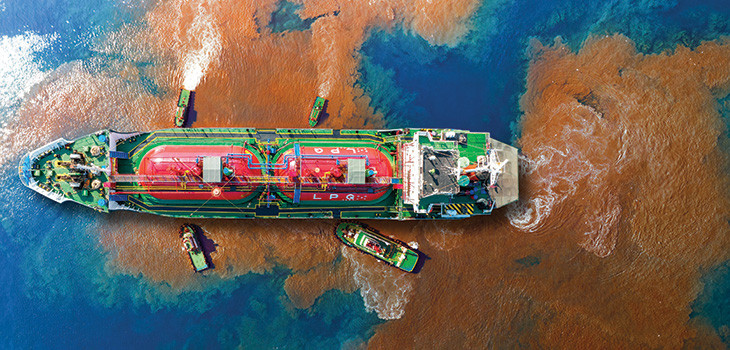
The activities of multinational oil companies in sub-Saharan Africa have been damaging both for the environment and for those communities directly and indirectly

To access this full article please fill the form below.
All fields are mandatory unless marked as 'Optional'.
If you already a subscriber to New Law Journal, please login here

MOVERS & SHAKERS

Pillsbury—Peter O’Hare

Pillsbury—Peter O’Hare

Partner hire bolstersprivate capital and global aviation finance offering

Morae—Carla Mendy

Morae—Carla Mendy

Digital and business solutions firm appoints chief operating officer

Twenty Essex—Clementine Makower & Stephen Du

Twenty Essex—Clementine Makower & Stephen Du

Set welcomes two experienced juniors as new tenants

NEWS
The High Court’s decision in Mazur v Charles Russell Speechlys has thrown the careers of experienced CILEX litigators into jeopardy, warns Fred Philpott of Gough Square Chambers in NLJ this week
Sir Brian Leveson’s claim that there is ‘no right to jury trial’ erects a constitutional straw man, argues Professor Graham Zellick KC in NLJ this week. He argues that Leveson dismantles a position almost no-one truly holds, and thereby obscures the deeper issue: the jury’s place within the UK’s constitutional tradition
Why have private prosecutions surged despite limited data? Niall Hearty of Rahman Ravelli explores their rise in this week's NLJ 
The public law team at Herbert Smith Freehills Kramer surveys significant recent human rights and judicial review rulings in this week's NLJ
In this week's NLJ, Mary Young of Kingsley Napley examines how debarring orders, while attractive to claimants seeking swift resolution, can complicate trials—most notably in fraud cases requiring ‘particularly cogent’ proof
back-to-top-scroll