


The company, which provides DNA, drug and alcohol testing among a range of testing services for local authorities and family law professionals, was awarded ISO 17025 accreditation by the UK Accreditation Service (UKAS) following a two-year validation process. ISO 17025 accreditation is an internationally recognised standard for Testing and Calibration Laboratories.
Demand for prenatal paternity tests is currently on the increase. In 2021, the company recorded a 47% rise in prenatal paternity tests versus pre-pandemic levels. The company attributes the increase to a rise in public awareness of the test.
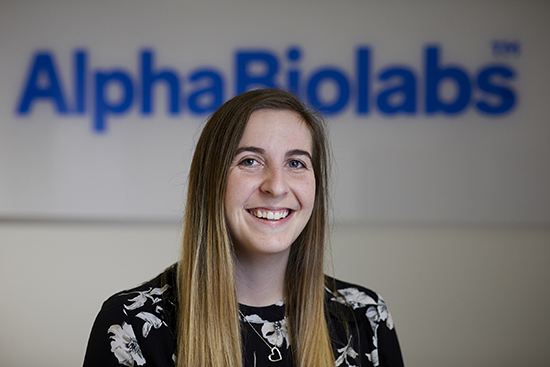
Casey Randall, head of DNA at AlphaBiolabs (pictured), said: ‘Establishing paternity before a baby is born can play a fundamental role in court proceedings, especially in cases where the safeguarding of a child is paramount.
‘With the addition of UKAS accreditation, our legal clients can be confident that AlphaBiolabs’ prenatal paternity testing is performed to the highest possible standard for fast, accurate results that they can trust.’
A non-invasive prenatal paternity test can be carried out from as early as seven weeks into pregnancy, making it possible to determine paternity before a baby is born. The test is 100% safe for both mother and baby, as it only requires cheek swabs and a blood sample from the mother and cheek swabs from the father.
It is possible to identify the unborn baby’s DNA via the mother’s blood sample, as DNA from the foetus is passed into the mother’s bloodstream via the placenta during pregnancy. If the man in question is the biological father of the child, the man and baby will share DNA markers.
Early identification of the biological father can be important when implementing plans for safeguarding, and can help prevent delays to pre-care, care, or supervision proceedings.
For every legal instruction received throughout 2022, AlphaBiolabs is also donating £5 via its Giving Back campaign, supporting four charities that work with vulnerable children and families across the UK.
For more information, visit https://www.alphabiolabs.co.uk/ or to request a quote, call 0333 600 1300 or email testing@alphabiolabs.com.

.tmb-mov69x69.jpg?sfvrsn=3f38efa6_1)


