header-logo header-logo

12 February 2016 / David Wurtzel
Issue: 7686 / Categories: Features
printer mail-detail

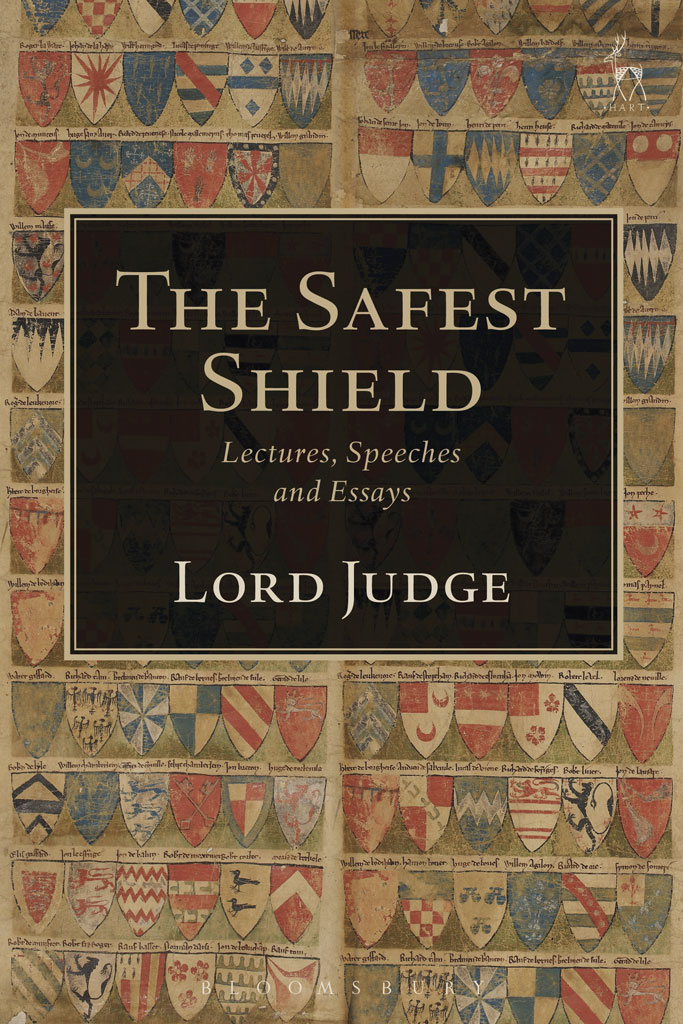
Book review: The Safest Shield: Lectures, Speeches and Essays

nlj_7686_bookreview

“Perhaps most striking is his recognition of how things could be better”

Author: Lord Judge
Publisher: Hart Publishing
ISBN: 9781509901890
Price: £22.50

During and after his six years as Lord Chief Justice, Lord Judge delivered numerous speeches and lectures—to fellow judges, to the Judicial College, at the Lord Mayor’s Banquet, in his Inn and in his native Malta. The texts of many of these talks have now been gathered together in this volume. They include a number of issues he felt deeply about, from the role of the judges to the independence of the judiciary and the rule of law; from the separation of powers to the accreditation of expert witnesses; from telling judges what their duties and responsibilities are to explaining to the outside world the difficulties judges have in discharging those duties; and most especially sentencing. The title is taken from Sir Edward Coke (“The law is the safest helmet; under the shield of the law no one is deceived”). Sad to say, Coke wound up

If you are not a subscriber, subscribe now to read this content
If you are already a subscriber sign in
...or Register for two weeks' free access to subscriber content

MOVERS & SHAKERS

Flint Bishop—Charlotte Harris

Flint Bishop—Charlotte Harris

Sheffield expansion continues with appointment of commercial property partner

Browne Jacobson—Paul Duggan

Browne Jacobson—Paul Duggan

Browne Jacobson strengthens banking and finance practice with latest partner appointment Paul Duggan

Ward Hadaway—Chris Piggott

Ward Hadaway—Chris Piggott

Employment partner joins Ward Hadaway

NEWS
The Law Society RFC Festival of Sport returns next month, bringing together legal and financial services professionals for one of the sector’s largest annual sporting events
Legal aid deserts leave almost one in four without adequate access to justice
The Solicitors Regulation Authority (SRA) has warned solicitors and law firms that using artificial intelligence does not alter their professional obligations, amid concerns over inaccurate legal material and client confidentiality
From forgotten interest claims to case-management appeals, a string of procedural developments offers useful—and occasionally cautionary—lessons for practitioners

Jonathan Fisher KC highlights that it now accounts for around 40% of criminal offences, with roughly 70% involving technology, and argues that the UK cannot simply prosecute its way out of the problem. Detection, investigation and prosecution all require improvement, while different fraud types demand tailored responses.

back-to-top-scroll