header-logo header-logo

The Society of Clinical Injury Lawyers—Sharon Allison

11 May 2023
Categories: Movers & Shakers , Profession
printer mail-detail
Ashtons Legal partner Sharon Allison appointed as first female chair of national society
Sharon Allison from Ashtons Legal LLP has been appointed as the first female chair of The Society of Clinical Injury Lawyers (SCIL). Sharon previously held the role of vice chair and took up her new role in May 2023.

SCIL is a member organisation for specialist claimant solicitor firms who work in the field of clinical negligence.  They have 75 members and are led by an executive team made up of the very best specialists in the field. The Society works closely with its membership to drive changes and clarity on a wide range of issues relevant to practitioners.  

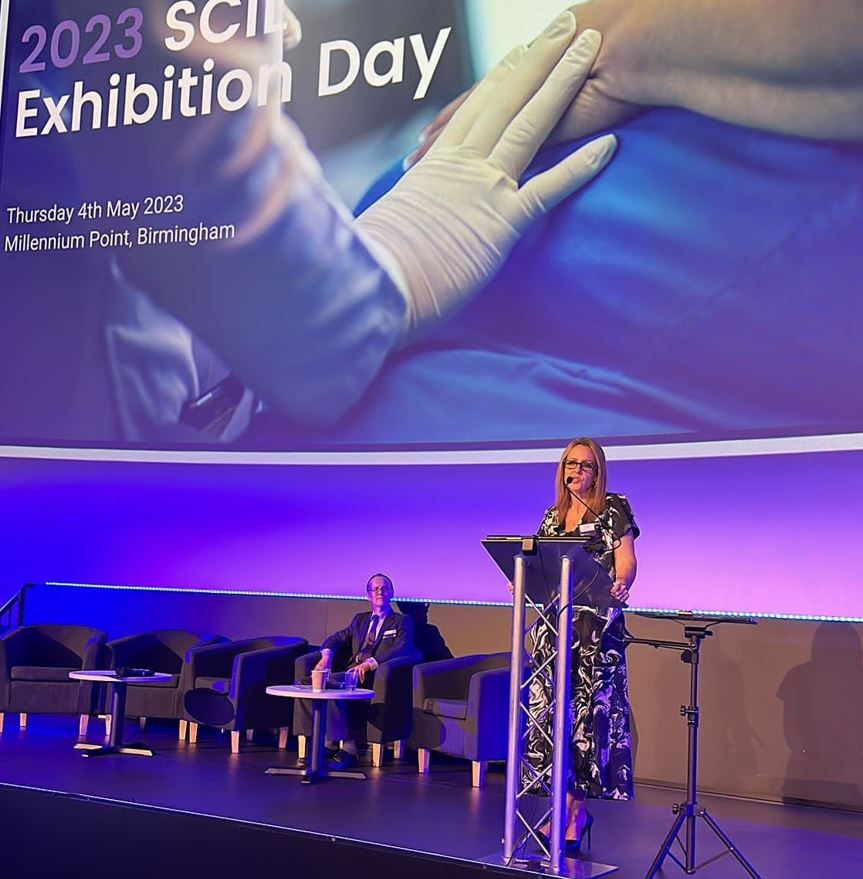
Previous successes include making the process easier for obtaining records of deceased patients, drafting the COVID-19 Clinical Negligence Protocol which led over £30 million in costs savings to the NHS/ the taxpayer and challenging the Government on its proposals around Fixed Recoverable Costs (FRC). There is an annual conference for members which in her new role, Sharon will be leading and delivering along with the executive team.
 
Sharon is Head of Medical Negligence at Ashtons Legal, which is ranked Band 1 for Clinical Negligence by Chambers and Partners.  She sits on the management board at the firm and is also a Fellow with the Association of Personal Injury Lawyers (APIL), a member on the esteemed specialist panel for AvMA (Action Against Medical Accidents) and is a Leading Individual with legal commentator, Legal 500.

Sharon comments: 'I’m very proud to have been elected as SCIL’s first female chair. I am very fortunate to be surrounded by incredible specialists in their field who have a wealth of knowledge and experience which makes SCIL the "go to" organisation for claimant Clinical Injury lawyers.

'A lot of the lawyers I work with in my day job and with SCIL have followed a very traditional route into law whereas mine has been quite different. I had an interest in medicine and the law but I did not have any legal qualifications when I joined the firm almost 23 years ago. I was given the opportunity to learn and qualify as a Fellow of the Chartered Institute of Legal Executives whilst working and I was able to absorb and focus my efforts on doing the best I could for my clients.

'That enriching experience has given me a deep and longstanding passion for Access to Justice and fighting for better patient safety and this is a passion I share with my SCIL colleagues. I am delighted that they have the faith in me to Chair the organisation through some challenging times ahead.'

MOVERS & SHAKERS

Browne Jacobson—Matthew Kemp

Browne Jacobson—Matthew Kemp

Firm grows real estate team with tenth partner hire this financial year

Hogan Lovells—Lisa Quelch

Hogan Lovells—Lisa Quelch

Partner hire strengthens global infrastructure and energy financing practice

Sherrards—Jan Kunstyr

Sherrards—Jan Kunstyr

Legal director bolsters international expertise in dispute resolution team

NEWS
Can a chief constable be held responsible for disobedient officers? Writing in NLJ this week, Neil Parpworth, professor of public law at De Montfort University, examines a Court of Appeal ruling that answers firmly: yes
Early determination is no longer a novelty in arbitration. In NLJ this week, Gustavo Moser, arbitration specialist lawyer at Lexis+, charts the global embrace of summary disposal powers, now embedded in the Arbitration Act 1996 and mirrored worldwide. Tribunals may swiftly dismiss claims with ‘no real prospect of succeeding’, but only if fairness is preserved
The Ministry of Justice is once again in the dock as access to justice continues to deteriorate. NLJ consultant editor David Greene warns in this week's issue that neither public legal aid nor private litigation funding looks set for a revival in 2026
Civil justice lurches onward with characteristic eccentricity. In his latest Civil Way column, Stephen Gold, NLJ columnist, surveys a procedural landscape featuring 19-page bundle rules, digital possession claims, and rent laws he labels ‘bonkers’
Neurotechnology is poised to transform contract law—and unsettle it. Writing in NLJ this week, Harry Lambert, barrister at Outer Temple Chambers and founder of the Centre for Neurotechnology & Law, and Dr Michelle Sharpe, barrister at the Victorian Bar, explore how brain–computer interfaces could both prove and undermine consent
back-to-top-scroll