header-logo header-logo

Time to go private?

05 December 2025 / Niall Hearty
Issue: 8142 / Categories: Features , Profession , Fraud , Criminal
printer mail-detail
237708
Niall Hearty on why private prosecutions have become increasingly popular
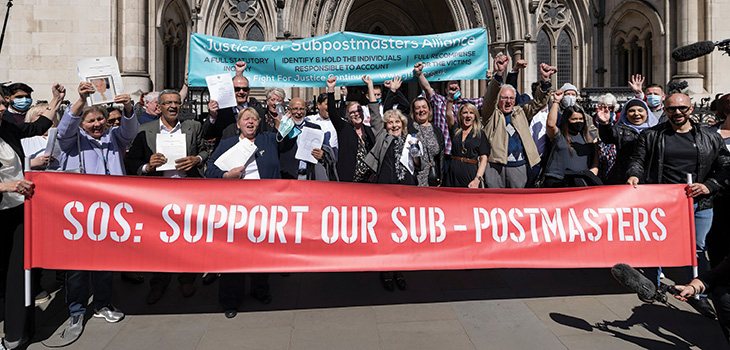
  • Private prosecutions are on the rise as stretched public authorities and growing fraud push more people to seek their own route to justice.
  • Success depends on expert guidance, swift evidence gathering and a clear assessment of whether this route is truly the best option.

There are few aspects of legal life that are not fully recorded, reported on and capable of being assessed through stacks of statistics. But private prosecutions appears to be one.

While there is no database that gives figures for the number of private prosecutions brought each year, the anecdotal evidence indicates this has been an expanding area of law for over a decade.

Just as there is no set of figures to detail the scale of the rise in private prosecutions, there is also no single, clear-cut reason for that increase. It can be argued, with some justification, that cuts to police and Crown Prosecution Service (CPS) funding have led to many people looking

If you are not a subscriber, subscribe now to read this content
If you are already a subscriber sign in
...or Register for two weeks' free access to subscriber content

MOVERS & SHAKERS

Moore Barlow—Jess Ready & Natasha Jones

Moore Barlow—Jess Ready & Natasha Jones

Commercial property and corporate teams expand in Southampton

Watershed—Rob Elliott

Watershed—Rob Elliott

Employment firm expands capability with experienced hire

Devonshires—Aoife Murphy & Mandeep Sahota

Devonshires—Aoife Murphy & Mandeep Sahota

Housing management and property litigation team bolstered by partner hires

NEWS
Law firm HFW is offering clients lawyers on call for dawn raids, sanctions issues and other regulatory emergencies
The long-awaited Getty Images v Stability AI judgment arrived at the end of last year—but not with the seismic impact many expected. In this week's issue of NLJ, experts from Arnold & Porter dissect a ruling that is ‘historic’ yet tightly confined
The UK Supreme Court may be deciding fewer cases, but its impact in 2025 was anything but muted. In this week's NLJ, Professor Emeritus Brice Dickson of Queen’s University Belfast reviews a year marked by historically low output, a striking rise in jointly authored judgments, and a continued decline in dissent. High-profile rulings on biological sex under the Equality Act, public access to Dartmoor, and fairness in sexual offence trials ensured the court’s voice carried far beyond the Strand
Delays at HM Land Registry are no longer a background irritation but a growing source of professional risk. Writing in NLJ this week, Phil Murrin of DAC Beachcroft explores how the ‘registration gap’—now stretching up to two years in complex cases—is fuelling client frustration, priority disputes, and negligence claims
Non-molestation orders are meant to be the frontline defence against domestic abuse, yet their enforcement often falls short. Writing in NLJ this week, Jeni Kavanagh, Jessica Mortimer and Oliver Kavanagh analyse why the criminalisation of breach has failed to deliver consistent protection
back-to-top-scroll