header-logo header-logo

18 February 2022 / Mark Pawlowski
Issue: 7967 / Categories: Features , Wills & Probate
printer mail-detail

Trust law miscellany

Mark Pawlowski looks at some unusual English cases in equity & trust law

Capricious trusts

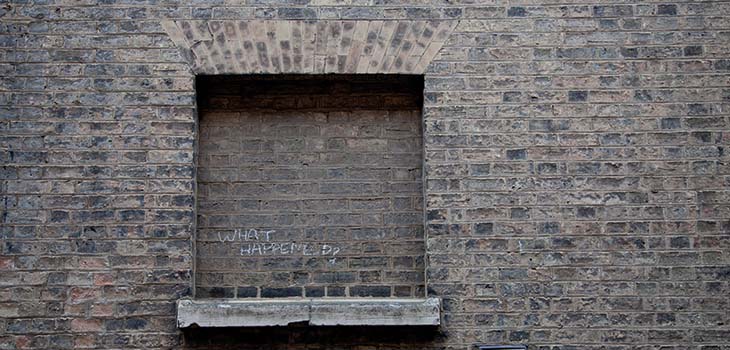
In Brown v Burdett (1882) 21 Ch D 667, the testatrix left her house to trustees upon trust to block up all the windows and doors in every room (except those in which she directed that a housekeeper and his wife should reside) for a period of 20 years and thereafter the property was to pass to the beneficiaries named in her will. The judgment of Bacon VC is, to say the least, succinct: ‘I think I must ‘unseal’ this useless, undisposed of property’. The case highlights the fundamental question of how far it is open to a testator to divert property by his will from family and dependants purely on the basis of some eccentric notions of vanity or self-expression.

Proprietary estoppel

In the context of a claim based on the doctrine of proprietary estoppel, the legal owner’s assurance may take a variety of different forms and a claim will not fail simply because the right

If you are not a subscriber, subscribe now to read this content
If you are already a subscriber sign in
...or Register for two weeks' free access to subscriber content

MOVERS & SHAKERS

NLJ Career Profile: Ken Fowlie, Stowe Family Law

NLJ Career Profile: Ken Fowlie, Stowe Family Law

Ken Fowlie, chairman of Stowe Family Law, reflects on more than 30 years in legal services after ‘falling into law’

Jackson Lees Group—Jannina Barker, Laura Beattie & Catherine McCrindle

Jackson Lees Group—Jannina Barker, Laura Beattie & Catherine McCrindle

Firm promotes senior associate and team leader as wills, trusts and probate team expands

Asserson—Michael Francos-Downs

Asserson—Michael Francos-Downs

Manchester real estate finance practice welcomes legal director

NEWS
Holiday lets may promise easy returns, but restrictive covenants can swiftly scupper plans. Writing in NLJ this week, Andrew Francis of Serle Court recounts how covenants limiting use to a ‘private dwelling house’ or ‘private residence’ have repeatedly defeated short-term letting schemes
Artificial intelligence (AI) is already embedded in the civil courts, but regulation lags behind practice. Writing in NLJ this week, Ben Roe of Baker McKenzie charts a landscape where AI assists with transcription, case management and document handling, yet raises acute concerns over evidence, advocacy and even judgment-writing
The cab-rank rule remains a bulwark of the rule of law, yet lawyers are increasingly judged by their clients’ causes. Writing in NLJ this week, Ian McDougall, president of the LexisNexis Rule of Law Foundation, warns that conflating representation with endorsement is a ‘clear and present danger’
The Supreme Court has drawn a firm line under branding creativity in regulated markets. In Dairy UK Ltd v Oatly AB, it ruled that Oatly’s ‘post-milk generation’ trade mark unlawfully deployed a protected dairy designation. In NLJ this week, Asima Rana of DWF explains that the court prioritised ‘regulatory clarity over creative branding choices’, holding that ‘designation’ extends beyond product names to marketing slogans
From cat fouling to Part 36 brinkmanship, the latest 'Civil way' round-up is a reminder that procedural skirmishes can have sharp teeth. NLJ columnist Stephen Gold ranges across recent decisions with his customary wit
back-to-top-scroll