header-logo header-logo

Birketts—new office in Bristol

13 June 2024
Categories: Movers & Shakers , Profession
printer mail-detail

Firm announces the opening of its seventh office

Birketts has announced the opening of a new office in Bristol. It will be the firm’s seventh office, adding to those in London, Sevenoaks, Cambridge, Chelmsford, Ipswich and Norwich. 

Birketts has operated a ‘hub’ in Bristol since January 2021, which has acted as a collaborative space for its South West-based partners and lawyers. In line with the firm’s growth strategy and reflecting the dynamic South West economy, the firm will establish a full-service presence in Bristol in autumn 2024, providing business and private client services across the region, as well as in the UK and internationally. 

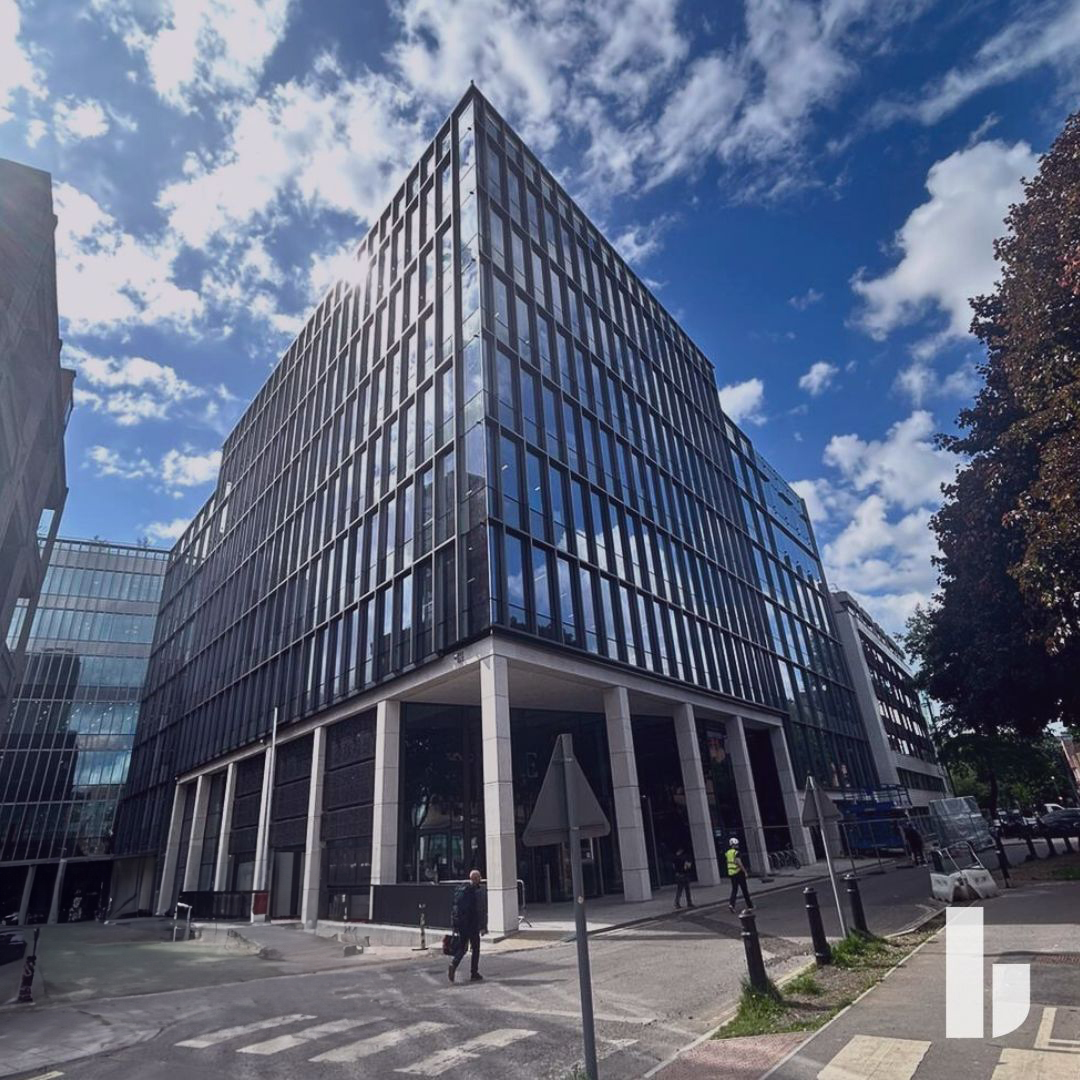
The firm will be based in EQ, an office development just a short walk from Bristol Temple Meads train station. EQ is the first new-build office in Bristol which has committed to deliver net zero carbon in operation, in accordance with the UK Green Building Council’s framework approach.   

The five partners leading the firm’s Bristol practice are: Tom Berisford (banking and finance); Deborah Carrivick (international private client), Stuart Cleak (real estate renewables), Dan Crockford and Alex Penberthy (shipping and international trade). These partners are joined by seven lawyers.

The office will focus on financial institutions, insurance, private wealth, renewables and clean energy, agribusiness, and shipping and international trade.

Jonathan Agar, chief executive at Birketts, said: ‘The opening of our Bristol office is a key step in Birketts’ growth trajectory and will further expand our network of offices in southern England. Our hub has been extremely successful and has laid the foundations for the introduction of our brand of Next Level Law to the South West.’

On behalf of the Bristol partners, Deborah said: ‘We have all lived and worked in Bristol for many years and are delighted that Birketts is formalising our presence in the city. We are also pleased to have secured an office space which aligns with the firm’s ESG strategy.

MOVERS & SHAKERS

Muckle LLP—Stacey Brown

Muckle LLP—Stacey Brown

Corporate governance and company law specialist joins the team

Excello Law—Heather Horsewood & Darren Barwick

Excello Law—Heather Horsewood & Darren Barwick

North west team expands with senior private client and property hires

Ward Hadaway—Paul Wigham

Ward Hadaway—Paul Wigham

Firm boosts corporate team in Newcastle to support high-growth technology businesses

NEWS
Can a chief constable be held responsible for disobedient officers? Writing in NLJ this week, Neil Parpworth, professor of public law at De Montfort University, examines a Court of Appeal ruling that answers firmly: yes
Neurotechnology is poised to transform contract law—and unsettle it. Writing in NLJ this week, Harry Lambert, barrister at Outer Temple Chambers and founder of the Centre for Neurotechnology & Law, and Dr Michelle Sharpe, barrister at the Victorian Bar, explore how brain–computer interfaces could both prove and undermine consent
Comparators remain the fault line of discrimination law. In this week's NLJ, Anjali Malik, partner at Bellevue Law, and Mukhtiar Singh, barrister at Doughty Street Chambers, review a bumper year of appellate guidance clarifying how tribunals should approach ‘actual’ and ‘evidential’ comparators. A new six-stage framework stresses a simple starting point: identify the treatment first
In cross-border divorces, domicile can decide everything. In NLJ this week, Jennifer Headon, legal director and head of international family, Isobel Inkley, solicitor, and Fiona Collins, trainee solicitor, all at Birketts LLP, unpack a Court of Appeal ruling that re-centres nuance in jurisdiction disputes. The court held that once a domicile of choice is established, the burden lies on the party asserting its loss
Early determination is no longer a novelty in arbitration. In NLJ this week, Gustavo Moser, arbitration specialist lawyer at Lexis+, charts the global embrace of summary disposal powers, now embedded in the Arbitration Act 1996 and mirrored worldwide. Tribunals may swiftly dismiss claims with ‘no real prospect of succeeding’, but only if fairness is preserved
back-to-top-scroll