header-logo header-logo

30 October 2015
Issue: 7674 / Categories: Features
printer mail-detail

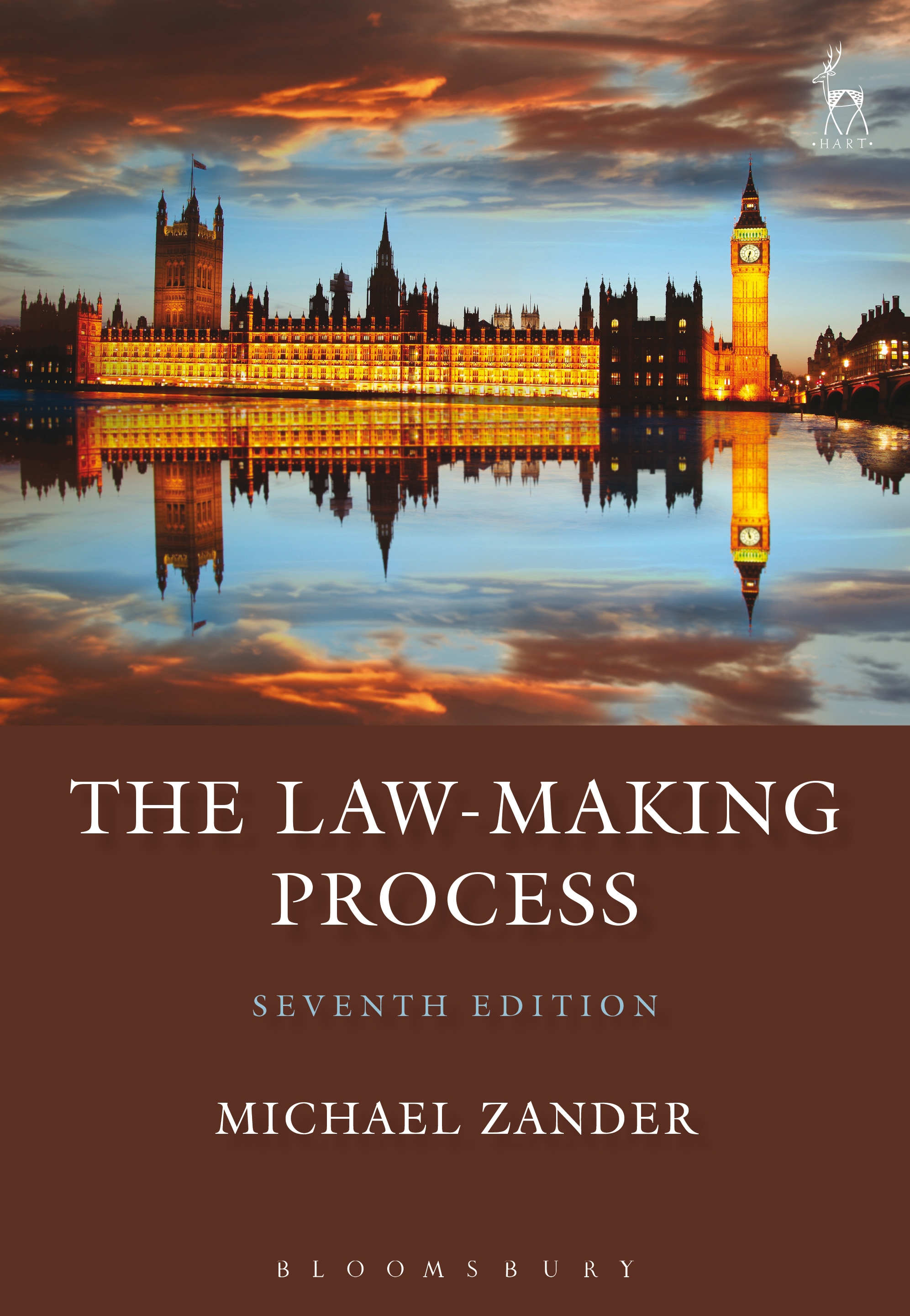
Book review: The Law-making Process (7th edition)

the_law-making_process_0

“Like all Professor Zander’s written works, this new edition provides us with a readable, illuminating study of the issues”

Author: Michael Zander
Publisher: Hart Publishing
ISBN: 9781849465625
Price: £32

Three short words encompass the most fundamental principle of our constitution. “Rule of law” is a phrase which sustains a very heavy load. The words are simple. The concept is complex and multifaceted, and frequently deployed in argument. Yet critical earlier questions are not attended to and very rarely addressed. Where does the law which rules us come from? Who or what makes it? And by what process is it made? During my own professional life the law has changed dramatically; so indeed has the constitution itself. The momentum for further change is inevitable and the need to focus on these unanswered questions undiminished.

Timely & illuminating

This new edition of the important analysis of The Law-making Process by Professor Michael Zander is timely. Since the last edition a full decade of evolutionary change in the constitution and the process by which

If you are not a subscriber, subscribe now to read this content
If you are already a subscriber sign in
...or Register for two weeks' free access to subscriber content

MOVERS & SHAKERS

Clyde & Co—Suriya Ashok

Clyde & Co—Suriya Ashok

Clyde Co strengthens energy transition and construction offering with hire of Suriya Ashok

Jurit—Nicole Gallop Mildon

Jurit—Nicole Gallop Mildon

Jurit appoints rare dual-qualified lawyer to expand Anglo-French private wealth expertise

NEWS
The Financial Reporting Council’s revised Audit Enforcement Procedure will alter the balance of power in corporate investigations
A telecoms operator may be able to hold over under the Landlord and Tenant Act 1954, yet still be unable to secure a renewal: an outcome described as a legal ‘paradox’

Safety fears do not automatically justify shutting an interested person out of a statutory will application

Consumer credit law is heading for its biggest shake-up in 50 years, with the Consumer Credit Act 1974 set to yield much of its detailed statutory machinery to FCA rules
The Supreme Court has settled a long-running dispute over part-time workers: unfavourable treatment need be a significant or effective cause, not the sole cause
back-to-top-scroll