header-logo header-logo

16 May 2025 / Charles Wynn-Evans
Issue: 8116 / Categories: Features , Employment , Human rights
printer mail-detail

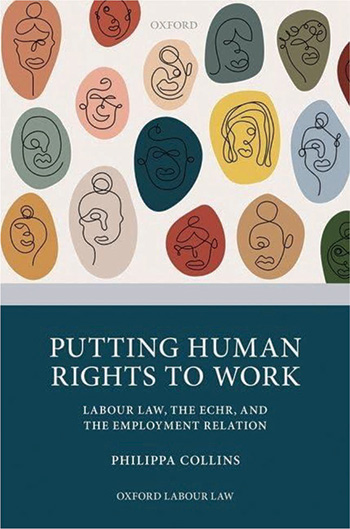
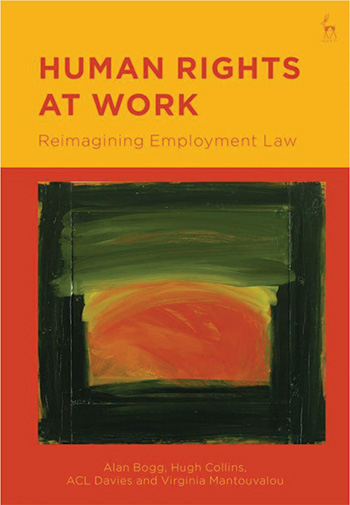
Book reviews: Human Rights at Work: Reimagining Employment Law & Putting Human Rights to Work: Labour Law, the ECHR, and the Employment Relation

  • Authors: Alan Bogg, Hugh Collins, ACL Davies & Virginia Mantouvalou
  • Publisher: Hart Publishing
  • ISBN: 9781509938735
  • RRP: £33.29

  • Author: Philippa Collins
  • Publisher: Oxford University Press
  • ISBN: 9780192894595
  • RRP: £99

Since the introduction of the Human Rights Act 1998, human rights principles have had an extensive impact on labour and employment law in relation to the interpretation, application and development of specific legal entitlements.

How individual human rights are treated in the workplace continues to be both topical and controversial, as is demonstrated by the various recent litigation concerning gender critical issues in the workplace. This was recently considered by the Court of Appeal in Higgs v Farmor’s School (The Archbishops' Council of the Church of England and others intervening) [2025] EWCA Civ 109, where it was held that dismissal of an employee for an objectively objectionable way of expressing a belief may not be discriminatory if objectively justified.

If you are not a subscriber, subscribe now to read this content
If you are already a subscriber sign in
...or Register for two weeks' free access to subscriber content

MOVERS & SHAKERS

Thomson Hayton Winkley—Jordan Wallace

Thomson Hayton Winkley—Jordan Wallace

Thomson Hayton Winkley strengthens family law team

Ward Hadaway—Barnaby Rosenthall

Ward Hadaway—Barnaby Rosenthall

Construction lawyer returns to Ward Hadaway in Teesside role

Bird & Bird—Shahin Baghaei

Bird & Bird—Shahin Baghaei

Bird Bird hires leading legal transformation expert

NEWS
Legal aid deserts leave almost one in four without adequate access to justice
The Solicitors Regulation Authority (SRA) has warned solicitors and law firms that using artificial intelligence does not alter their professional obligations, amid concerns over inaccurate legal material and client confidentiality
From forgotten interest claims to case-management appeals, a string of procedural developments offers useful—and occasionally cautionary—lessons for practitioners

Jonathan Fisher KC highlights that it now accounts for around 40% of criminal offences, with roughly 70% involving technology, and argues that the UK cannot simply prosecute its way out of the problem. Detection, investigation and prosecution all require improvement, while different fraud types demand tailored responses.

How forcefully can a litigant criticise a public authority before robust advocacy crosses the line into unreasonable conduct? 
back-to-top-scroll