header-logo header-logo

22 May 2015 / Thomas Spencer
Issue: 7653 / Categories: Features , Commercial
printer mail-detail

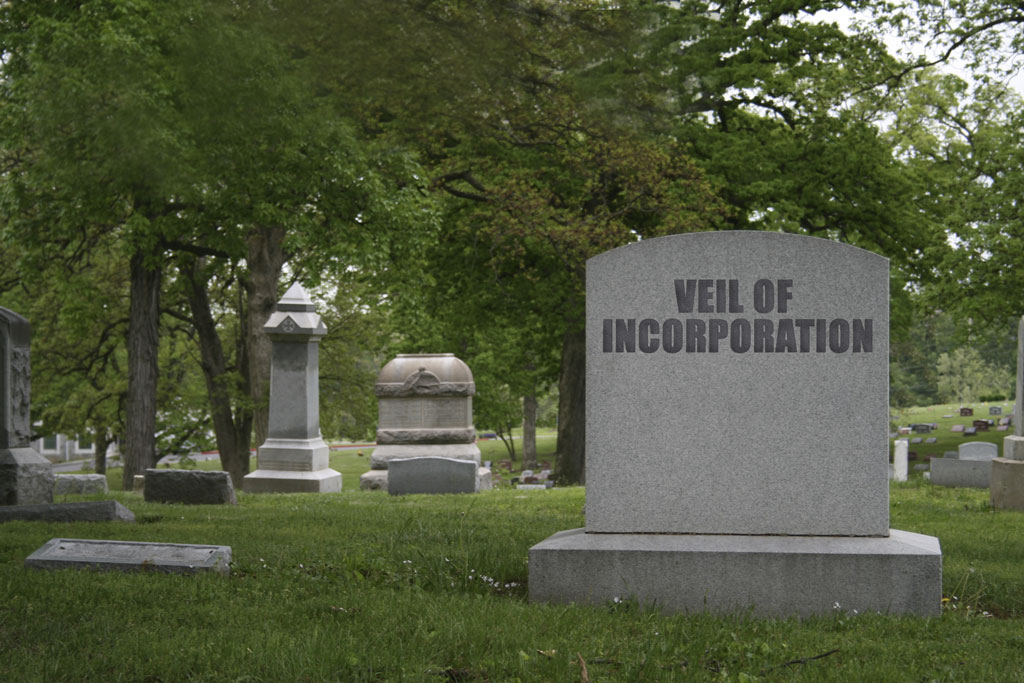
Curtains for a veil

nlj_7653_spencer

Thomas Spencer suggests an elegant but overlooked approach for lifting the corporate veil

In Prest v Prestodel Resources Limited [2013] UKSC 34, [2013] 4 All ER 673, the doctrine of the undisclosed principal in contract was not considered. Earlier, VTB Capital Plc v Nutritek International Corp [2013] UKSC 5, [2013] 1 All ER 1296, reduced that doctrine to contract law, neglecting the duality explicit in its name and hence agency law. Each case sought to uphold Salomon v A Salomon and Co Ltd [1897] AC 22, [1895-99] All ER Rep 33. Yet in Prest the Supreme Court imposed a trust, the very result expressly rejected by the House of Lords in Salomon , when it overturned the Court of Appeal’s rejection of Vaughan Williams J’s finding of disclosed agency.

This article upholds the fact of incorporation, but would lift the corporate veil where the independence of a company is suspect, to determine whether that company is an agent in particular. The doctrine of the undisclosed principal in contract provides a duality for doing

If you are not a subscriber, subscribe now to read this content
If you are already a subscriber sign in
...or Register for two weeks' free access to subscriber content

MOVERS & SHAKERS

Clarke Willmott—Matthew Roach

Clarke Willmott—Matthew Roach

Partner joins commercial property team in Taunton office

Farrer & Co—Richard Lane

Farrer & Co—Richard Lane

Londstanding London firm appoints new senior partner

Bird & Bird—Sue McLean

Bird & Bird—Sue McLean

Commercial team in London welcomes technology specialist as partner

NEWS
What safeguards apply when trust corporations are appointed as deputy by the Court of Protection? 
Disputing parties are expected to take part in alternative dispute resolution (ADR), where this is suitable for their case. At what point, however, does refusing to participate cross the threshold of ‘unreasonable’ and attract adverse costs consequences?
When it comes to free legal advice, demand massively outweighs supply. 'Millions of people are excluded from access to justice as they don’t have anywhere to turn for free advice—or don’t know that they can ask for help,' Bhavini Bhatt, development director at the Access to Justice Foundation, writes in this week's NLJ
When an ex-couple is deciding who gets what in the divorce or civil partnership dissolution, when is it appropriate for a third party to intervene? David Burrows, NLJ columnist and solicitor advocate, considers this thorny issue in this week’s NLJ
NLJ's latest Charities Appeals Supplement has been published in this week’s issue
back-to-top-scroll