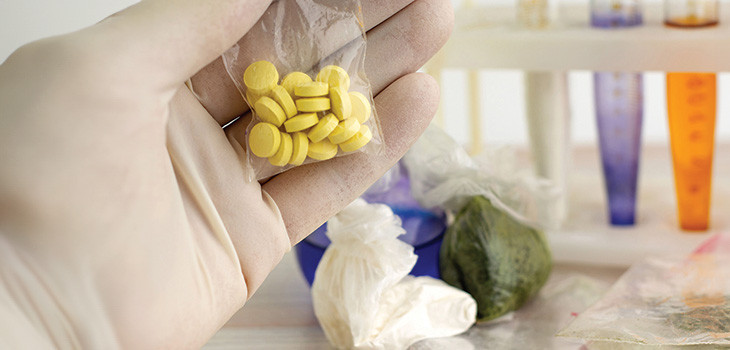
As a leading provider of drug testing services for family solicitors, social workers and FDACs, we are used to receiving questions regarding trends in illicit drug use; particularly in cases where a lesser-known drug shows up in a drug test, or where a substance is reported in the test results that may not have been disclosed at the time samples were collected.
New Psychoactive Substances—often known as designer drugs or, misleadingly, ‘legal highs’—are man-made, synthetic drugs that are now showing up regularly in the results of legally-instructed drug tests.
These drugs are manufactured to mimic the effects of ‘traditional’ illegal drugs, such as cocaine, ecstasy, and cannabis and are extremely unpredictable due to their potency. Furthermore, they are often designed to get around drug laws, making them easier for people to purchase via ‘legitimate’ channels, ie, online.
Examples of designer drugs include Bath Salts (synthetic cathinones), a group of drugs known for their stimulant effects, Spice (synthetic cannabis), which mimics the effects of tetrahydrocannabinol (THC), and nitazenes.
Nitazenes are a group of powerful synthetic opioids, that can be injected, inhaled, smoked, or swallowed in tablet form, and have begun to flood the UK market, with an increasing number of sample donors testing positive for these substances.
The effects of nitazenes mimic that of opiates and pose an increased risk of overdose due to their potency.
In fact, they have already been linked to dozens of fatalities in the UK, with the Advisory Council on the Misuse of Drugs reporting* that over a quarter of cocaine samples and more than half of heroin/diamorphine samples seized were found to contain isotonitazene as an adulterant.
Other trends in recreational drug use include the increased use of designer ‘cocktails’ of drugs. One example of this is Calvin Klein or CK which, rather than being a synthetic drug manufactured in the lab, is instead a deadly combination of cocaine and ketamine, designed to amplify the effects of both substances.
Buyer beware
The fact that street drugs are sold illegally means that there is rarely any quality control involved in the manufacturing process.
So, whether the user is purchasing a powder, pill, herb, or liquid, unscrupulous manufacturers and dealers may have added any number of substances into the mix.
While laboratories like AlphaBiolabs may be instructed to test for the presence of a specific substance, analysis can often reveal the presence of other substances that may not have been disclosed by the sample donor at the time samples were collected.
This can sometimes cause the sample donor to dispute their test results, where they claim to have unwittingly consumed substances they did not plan to take.
As a provider of industry-leading drug testing services, we have seen several instances of this, including one example from a sample donor, who we will refer to as Mr X.
Five substances were found to be present in the hair sample of Mr X: THC, cocaine, norcocaine, benzoylecgonine and ketamine.
While he did not dispute the other test results, Mr X was adamant that he had not taken ketamine and could not fathom why it might have shown up in his test results, saying: “I haven’t even seen ketamine. I don’t know anyone who uses it, or even how to use it.
“I would not be able to get it if I tried, I don’t have a horse, and I’m not a vet!”
In addition to unwittingly consuming a combination of different drugs, there are often other impurities found in substances purchased at street level. Examples include opiate alkaloids in heroin (that occur during the manufacturing process), adulterants, which are designed to mimic the effects of the drug purportedly being offered (eg, caffeine in ecstasy or amphetamines), and diluents used to ‘bulk’ out the product (eg, sugars like glucose and lactose).
Drug test results you can trust
AlphaBiolabs provides court-admissible drug testing for family law professionals, FDACs, social workers and local authorities, direct from our state-of-the-art, UKAS-accredited laboratory.
We test a wide range of biological samples for the presence of drugs and their metabolites, including urine, oral fluid, hair, and nails. We can also test for a variety of drugs beyond our standard panel, including New Psychoactive Substances (designer drugs).
Our nationwide network of professional sample collectors are trained to collect samples under chain of custody, and our test results are accepted by Family Courts, the Ministry of Justice and the Child Maintenance Service.
We also offer free sample collection for legally-instructed drug tests from our 19 walk-in centres, across the UK and Ireland.
Legal clients can claim 15% off AlphaBiolabs’ drug testing until 30 June 2024.Simply cite DRUG15when requesting your quote.
For more information or to request a quote, call 0333 600 1300, email testing@alphabiolabs.com or go online to www.alphabiolabs.co.uk/legal-test-forms/