


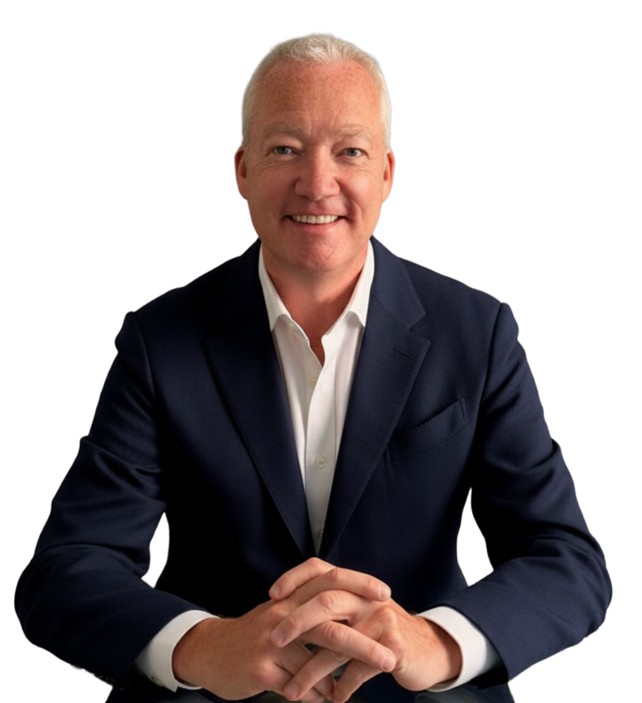
EIP is delighted to announce that Stuart Malcolm has joined EIP as a Partner, Solicitor strengthening its Commercial practice. Stuart brings more than 25 years of experience as a commercial and intellectual property lawyer, with a career spanning private practice, senior in-house leadership, and the deep tech and innovation sectors.
Stuart previously worked at M Squared, a leading UK photonics and quantum technology business, where he spent nearly a decade as a senior legal leader. As Group General Counsel and Group Company Secretary, he built and led the group-wide legal function across a worldwide business, with responsibility for legal operations, compliance, and intellectual property.
During his time at M Squared, Stuart created and led the group's intellectual property strategy and advised on major commercial and licensing deals, including international agreements across the space, semiconductor, and quantum sectors. He worked closely with the business as it scaled, giving him a clear, practical view of how innovative companies turn their ideas into commercial value.
Before moving in-house, Stuart held partner roles at several law firms. He established and led the intellectual property team at Shoosmiths in the Thames Valley, was a Partner at MBM Commercial, and founded his own specialist technology and innovation law firm, Stuart Malcolm LLP. His earlier career included senior legal roles at Oxford University Press and a University of Oxford spin-out, giving him a rare combination of private practice, in-house, and commercial experience.
Stuart advises businesses across the innovation economy, from start-ups and scale-ups to research institutions, universities, and major technology companies. His work covers commercial contracts, licensing, joint ventures, spin-outs, technology transfer, and the commercialisation of intellectual property. He has deep sector knowledge in fields including quantum, photonics, semiconductors, artificial intelligence, life sciences, and space.
Stuart is a qualified solicitor in both Scotland and England and Wales, and a Notary Public. He holds an honours degree in Commercial Law from the University of Glasgow.
Magnus Hallin, CEO of EIP, commented: "We are very pleased to welcome Stuart to EIP. He brings a rare mix of commercial, in-house, and private practice experience, and a deep understanding of how innovative businesses turn intellectual property into commercial value. Stuart's arrival strengthens our Commercial practice and supports our focus on giving clients clear, practical advice on their most important commercial and IP decisions."
Stuart's appointment reflects our continued investment in commercial expertise that sits alongside our patent and litigation strengths, helping clients protect, develop, and commercialise their most valuable ideas.


