header-logo header-logo

From the dungeons of Dartmoor…

02 July 2021 / William Gibson
Issue: 7939 / Categories: Features , Public
printer mail-detail
52143
William Gibson explores the unlikely origins of the law of parliamentary privilege

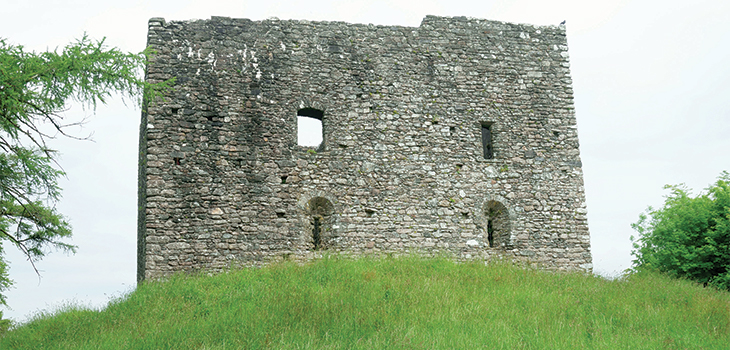
When Dominic Cummings launched his diatribe against Boris Johnson in a parliamentary committee in May, he did so secure in the knowledge that he was safe from reparation, because of the law of parliamentary privilege. Did he know that law dates back nearly 500 years, and emanated from the depths of a dingy dungeon in a Dartmoor castle?

Starter for tin

Dartmoor attracted the attention of the Normans soon after the conquest, who declared it a royal forest and a private hunting ground for the favoured few, protecting the landscape and wildlife with forestry law which, under William Rufus, included a list of offences punishable by death.

The other attraction of Dartmoor for the Normans was tin. Moorland tin had been picked off the surface or dug out of riverbanks probably since Roman times. By the start of the 12th century, improved techniques and increased use of water-powered machinery led to greatly increased production and a bountiful source

If you are not a subscriber, subscribe now to read this content
If you are already a subscriber sign in
...or Register for two weeks' free access to subscriber content

MOVERS & SHAKERS

DWF—Ed Williams

DWF—Ed Williams

Public sector disputes capability bolstered by partner hire in Leeds

Blake Morgan—Scott Hilton, Joan Yu & Melia Hirst

Blake Morgan—Scott Hilton, Joan Yu & Melia Hirst

Firm strengthens corporate, real estate and insolvency teams with partner trio

Seddons GSC—David Seal & Emma Clifford

Seddons GSC—David Seal & Emma Clifford

Consultant and solicitor join commercial real estate team

NEWS
Judging is ‘more intellectually demanding than any other role in public life’—and far messier than outsiders imagine. Writing in NLJ this week, Professor Graham Zellick KC reflects on decades spent wrestling with unclear legislation, fragile precedent and human fallibility
The long-predicted death of the billable hour may finally be here—and this time, it’s armed with a scythe. In a sweeping critique of time-based billing, Ian McDougall, president of the LexisNexis Rule of Law Foundation, argues in this week's NLJ that artificial intelligence has made hourly charging ‘intellectually, commercially and ethically indefensible’
From fake authorities to rent reform, the civil courts have had a busy start to 2026. In his latest 'Civil way' column for NLJ this week, Stephen Gold surveys a procedural landscape where guidance, discretion and discipline are all under strain
Fact-finding hearings remain a fault line in private family law. Writing in NLJ this week, Victoria Rylatt and Robyn Laye of Anthony Gold Solicitors analyse recent appeals exposing the dangers of rushed or fragmented findings
As the Winter Olympics open in Milan and Cortina, legal disputes are once again being resolved almost as fast as the athletes compete. Writing in NLJ this week, Professor Ian Blackshaw of Valloni Attorneys examines the Court of Arbitration for Sport’s (CAS's) ad hoc divisions, which can decide cases within 24 hours
back-to-top-scroll