header-logo header-logo

Lady Hale: a judge & her law (Pt 2)

11 March 2020 / David Burrows
Issue: 7878 / Categories: Features , Family
printer mail-detail
17347
David Burrows marks Lady Hale’s involvement in the development & introduction of the Children Act
  • Lady Hale, especially in her career in the Supreme Court, has done what she can to recognise children’s rights in litigation about them.

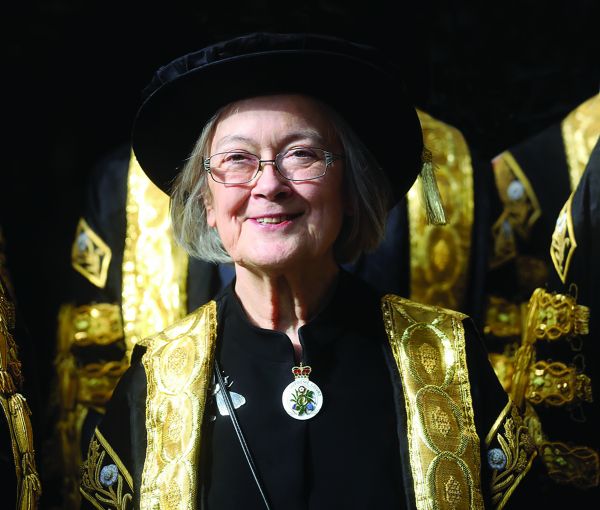
Brenda Hale’s greatest achievement as a law reformer is the part she played in developing the ideas behind, and then the legislative achievement of, the Children Act 1989. The extent to which the Act has developed the courts’ duties of listening to children has been disappointing (see ‘Happy anniversary?’ 169 NLJ 7866, p9). That is less the fault of the statutory scheme than of the family courts by which it has been operated. No fault attaches to Mrs Justice, then Lady Justice, and now Lady Hale. Her part in the jurisprudence arising from children’s rights and the Act, which has paralleled her judicial career—she was appointed a High Court judge in 1994—is reviewed in this article.

The 1980s was rich in extra-statutory child law reform pioneered

If you are not a subscriber, subscribe now to read this content
If you are already a subscriber sign in
...or Register for two weeks' free access to subscriber content

MOVERS & SHAKERS

Pillsbury—Peter O’Hare

Pillsbury—Peter O’Hare

Partner hire bolstersprivate capital and global aviation finance offering

Morae—Carla Mendy

Morae—Carla Mendy

Digital and business solutions firm appoints chief operating officer

Twenty Essex—Clementine Makower & Stephen Du

Twenty Essex—Clementine Makower & Stephen Du

Set welcomes two experienced juniors as new tenants

NEWS
The High Court’s decision in Mazur v Charles Russell Speechlys has thrown the careers of experienced CILEX litigators into jeopardy, warns Fred Philpott of Gough Square Chambers in NLJ this week
Sir Brian Leveson’s claim that there is ‘no right to jury trial’ erects a constitutional straw man, argues Professor Graham Zellick KC in NLJ this week. He argues that Leveson dismantles a position almost no-one truly holds, and thereby obscures the deeper issue: the jury’s place within the UK’s constitutional tradition
Why have private prosecutions surged despite limited data? Niall Hearty of Rahman Ravelli explores their rise in this week's NLJ 
The public law team at Herbert Smith Freehills Kramer surveys significant recent human rights and judicial review rulings in this week's NLJ
In this week's NLJ, Mary Young of Kingsley Napley examines how debarring orders, while attractive to claimants seeking swift resolution, can complicate trials—most notably in fraud cases requiring ‘particularly cogent’ proof
back-to-top-scroll