header-logo header-logo

16 January 2026
Issue: 8145 / Categories: Legal News , In Court , Equality , Public
printer mail-detail

NLJ this week: Spotlight on the Supreme Court in 2025

240099
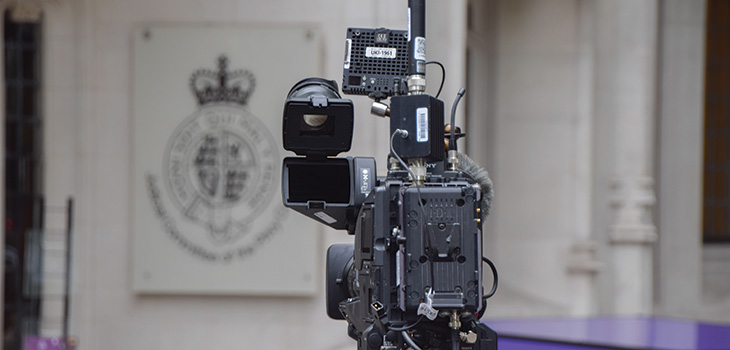
The UK Supreme Court may be deciding fewer cases, but its impact in 2025 was anything but muted. In this week's NLJ, Professor Emeritus Brice Dickson of Queen’s University Belfast reviews a year marked by historically low output, a striking rise in jointly authored judgments, and a continued decline in dissent. High-profile rulings on biological sex under the Equality Act, public access to Dartmoor, and fairness in sexual offence trials ensured the court’s voice carried far beyond the Strand

The analysis highlights a court increasingly focused on consensus, with co-authored judgments now the norm rather than the exception. In contrast, the Privy Council enjoyed a record year, delivering faster and shorter decisions across multiple jurisdictions.

Dickson suggests the trend raises important questions about transparency, judicial style, and constitutional influence: fewer cases, carefully chosen, may be shaping the law more decisively than ever before.

Issue: 8145 / Categories: Legal News , In Court , Equality , Public
printer mail-details

MOVERS & SHAKERS

Keystone Law—Milena Szuniewicz-Wenzel & Ian Hopkinson

Keystone Law—Milena Szuniewicz-Wenzel & Ian Hopkinson

International arbitration team strengthened by double partner hire

Coodes Solicitors—Pam Johns, Rachel Pearce & Bradley Kaine

Coodes Solicitors—Pam Johns, Rachel Pearce & Bradley Kaine

Firm celebrates trio holding senior regional law society and junior lawyers division roles

Michelman Robinson—Sukhi Kaler

Michelman Robinson—Sukhi Kaler

Partner joins commercial and business litigation team in London

NEWS
The Legal Action Group (LAG)—the UK charity dedicated to advancing access to justice—has unveiled its calendar of training courses, seminars and conferences designed to support lawyers, advisers and other legal professionals in tackling key areas of public interest law
The Police and Criminal Evidence Act 1984 transformed criminal justice. Writing in NLJ this week, Ed Cape of UWE and Matthew Hardcastle and Sandra Paul of Kingsley Napley trace its ‘seismic impact’
Operational resilience is no longer optional. Writing in NLJ this week, Emma Radmore and Michael Lewis of Womble Bond Dickinson explain how UK regulators expect firms to identify ‘important business services’ that could cause ‘intolerable levels of harm’ if disrupted
As the drip-feed of Epstein disclosures fuels ‘collateral damage’, the rush to cry misconduct in public office may be premature. Writing in NLJ this week, David Locke of Hill Dickinson warns that the offence is no catch-all for political embarrassment. It demands a ‘grave departure’ from proper standards, an ‘abuse of the public’s trust’ and conduct ‘sufficiently serious to warrant criminal punishment’
Employment law is shifting at the margins. In his latest Employment Law Brief for NLJ this week, Ian Smith of Norwich Law School examines a Court of Appeal ruling confirming that volunteers are not a special legal species and may qualify as ‘workers’
back-to-top-scroll