header-logo header-logo

17 September 2020
Issue: 7902 / Categories: Legal News , International justice
printer mail-detail

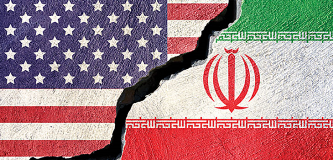
NLJ this week: Iran v US―sanctions & a nuclear snub for Trump

The US has sought unilaterally to re-introduce sanctions against Iran in August but has been ‘simply ignored’, Marc Weller, Professor of International Law at Cambridge University, writes in NLJ this week

The Iran nuclear deal of 2015―called the ‘worst deal ever’ by Donald Trump―committed Tehran to abandoning its reputed nuclear weapons programme. However, parties could bring the sanctions back into operation through a unilateral claim of significant non-compliance to the UN Security Council. The US did this but was ignored.

‘If this position is maintained, this would represent an unprecedented defeat for the Trump administration,’ Weller says.

‘After the extensive period of US hostility to multilateralism, multilateralism has bitten back, it seems.’

Weller outlines how he believes the US bungled the Iran sanctions snapback, and looks at the ‘emerging and increasingly serious pattern of non-compliance’.

MOVERS & SHAKERS

Walkers—Muriel Marseille

Walkers—Muriel Marseille

Ashurst's Chief Risk Officer joins Walkers

Excello Law—John Osborne

Excello Law—John Osborne

Northern family lawyer John Osborne joins Excello

mfg Solicitors—Rebecca Rogers, Kennedy Langley & Victoria Griffiths

mfg Solicitors—Rebecca Rogers, Kennedy Langley & Victoria Griffiths

Trio of promotions announced at Kidderminster law firm mfg Solicitors

NEWS
A sole director can conspire with their own company for the purposes of the tort of unlawful means conspiracy, the High Court has ruled in a judgment with potentially wide implications for business disputes
The Court of Appeal has reinforced that domicile depends on intention rather than residence alone, in a significant post-Brexit ruling on cross-border financial remedy claims
The Chancery Division's long history comes to an end this autumn as it is reborn as the Business and Property Division, prompting questions over whether the shake-up is really necessary
The Financial Conduct Authority (FCA) continues to show that failing to disclose regulatory issues can attract harsher consequences than the original misconduct itself
Rejecting a generous settlement can prove an expensive mistake, as two recent high-profile cases demonstrate
back-to-top-scroll