header-logo header-logo

26 November 2020
Issue: 7912 / Categories: Legal News , Covid-19 , Profession , Constitutional law
printer mail-detail

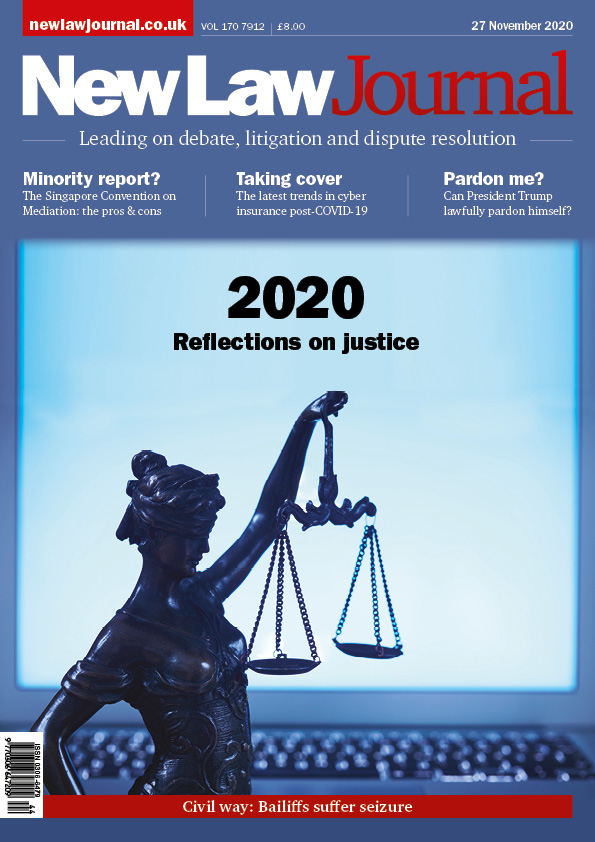
NLJ this week: The Bar in 2020

Bar Council chair Amanda Pinto QC reflects on an unpredictable year, in this week’s NLJ

It was supposed to be about Brexit and criminal legal aid reform. It turned out rather differently, after COVID-19 struck in March. Pinto notes her pride in the way the Bar adapted so quickly. But there were other unexpected events in 2020.

‘We did not foresee the day when the UK government would admit to breaching international law in a “specific and limited way”, writes Pinto.

There was also the ‘pivotal moment of realisation’, after the killing of George Floyd by police officers in the US, that ‘despite our efforts…we had not done enough to address the daily problems and the career trajectories for many of our talented Black members’. 

@thebarcouncil

MOVERS & SHAKERS

NLJ Career Profile: Stephen Ward, The Barrister Group

NLJ Career Profile: Stephen Ward, The Barrister Group

From mowing lawns to life at the Bar: Stephen Ward reflects on an unconventional career

Clarke Willmott—Ben Loosemore

Clarke Willmott—Ben Loosemore

Commercial property partner joins Clarke Willmott in Southampton

Ellisons—Robert Tiffen

Ellisons—Robert Tiffen

Robert Tiffen joins Ellisons as Partner in growing Norwich office

NEWS
The Law Society RFC Festival of Sport returns next month, bringing together legal and financial services professionals for one of the sector’s largest annual sporting events
Legal aid deserts leave almost one in four without adequate access to justice
The Solicitors Regulation Authority (SRA) has warned solicitors and law firms that using artificial intelligence does not alter their professional obligations, amid concerns over inaccurate legal material and client confidentiality
From forgotten interest claims to case-management appeals, a string of procedural developments offers useful—and occasionally cautionary—lessons for practitioners

Jonathan Fisher KC highlights that it now accounts for around 40% of criminal offences, with roughly 70% involving technology, and argues that the UK cannot simply prosecute its way out of the problem. Detection, investigation and prosecution all require improvement, while different fraud types demand tailored responses.

back-to-top-scroll