header-logo header-logo

27 September 2024 / John Gould
Issue: 8087 / Categories: Opinion , Regulatory , Profession , Training & education
printer mail-detail

Practising matters

190820
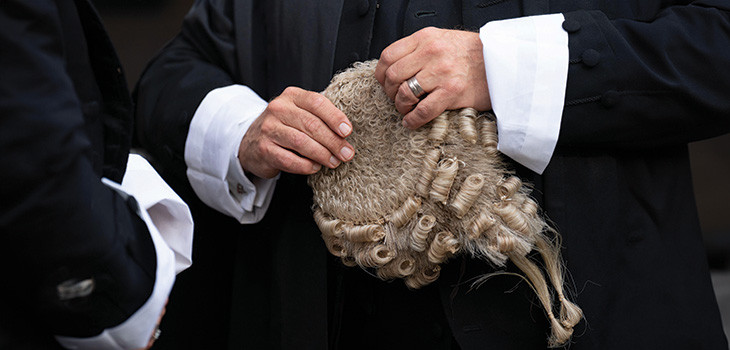
How to protect the title of barrister? John Gould explores the options
‘When I, good friends, was called to the bar
I’d an appetite fresh and hearty.
But I was, as many young barristers are,
An impecunious party.
I’d a swallow-tail coat of a beautiful blue,
A brief which I bought off a booby,
A couple of shirts, and a collar or two,
And a ring that looked like a ruby!’
(W S Gilbert)

Things have moved on since Trial by Jury was first produced in 1875, but ‘barrister’ remains one of the few desirable titles that can only be obtained partly by eating while wearing period costume.

When chair of the Bar last year Nick Vineall KC called for the title ‘barrister’ to be reserved for those who have completed pupillage. The present system means that the title of barrister is conferred on people who have never practised, will never practise and are not actually entitled to practise as barristers anyway.

The

If you are not a subscriber, subscribe now to read this content
If you are already a subscriber sign in
...or Register for two weeks' free access to subscriber content

MOVERS & SHAKERS

Thomson Hayton Winkley—Jordan Wallace

Thomson Hayton Winkley—Jordan Wallace

Thomson Hayton Winkley strengthens family law team

Ward Hadaway—Barnaby Rosenthall

Ward Hadaway—Barnaby Rosenthall

Construction lawyer returns to Ward Hadaway in Teesside role

Bird & Bird—Shahin Baghaei

Bird & Bird—Shahin Baghaei

Bird Bird hires leading legal transformation expert

NEWS
The Solicitors Regulation Authority (SRA) has warned solicitors and law firms that using artificial intelligence does not alter their professional obligations, amid concerns over inaccurate legal material and client confidentiality
From forgotten interest claims to case-management appeals, a string of procedural developments offers useful—and occasionally cautionary—lessons for practitioners

Jonathan Fisher KC highlights that it now accounts for around 40% of criminal offences, with roughly 70% involving technology, and argues that the UK cannot simply prosecute its way out of the problem. Detection, investigation and prosecution all require improvement, while different fraud types demand tailored responses.

How forcefully can a litigant criticise a public authority before robust advocacy crosses the line into unreasonable conduct? 
Can a meticulously maintained spreadsheet turn a couple’s informal financial arrangements into legally enforceable obligations? 
back-to-top-scroll