header-logo header-logo

17 February 2023 / David Greene
Issue: 8013 / Categories: Opinion , Rule of law , Human rights
printer mail-detail

Rule of law in recession?

111200
How is the rule of law faring under the current Lord Chancellor? David Greene warns against the creeping threats to our rights

The rule of law—that political philosophy that protects accountability, just law, open government, and accessible and impartial justice—appears, like democracy, to be in recession. This recession can be swift or slowly accrue. It has been swift in both Poland and Hungary. The Freedom House index of basic freedoms in countries traces the decline. In Poland, the government has sought to curtail the independence of the judiciary. In Hungary, Viktor Orbán’s self-declared ‘illiberal democracy’ has similarly sought to control the judiciary, with the head of the judicial council, Csaba Vasvári, complaining recently of excessive political control and challenges to the rule of law.

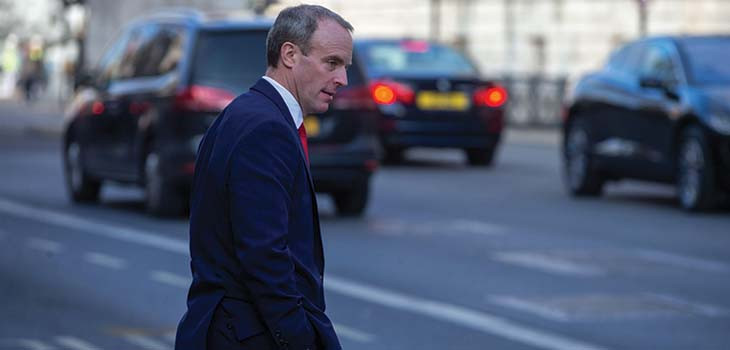
Does the rule of law, however, face such challenge in the UK? Is the government’s current legislative programme, in part guided by the Lord Chancellor and deputy prime minister, Dominic Raab (who at the time of writing continues to hold that position), the continuation of a

If you are not a subscriber, subscribe now to read this content
If you are already a subscriber sign in
...or Register for two weeks' free access to subscriber content

MOVERS & SHAKERS

Thackray Williams—Lucy Zhu

Thackray Williams—Lucy Zhu

Dual-qualified partner joins as head of commercial property department

Morgan Lewis—David A. McManus

Morgan Lewis—David A. McManus

Firm announces appointment of next chair

Burges Salmon—Rebecca Wilsker

Burges Salmon—Rebecca Wilsker

Director joins corporate team from the US

NEWS
What safeguards apply when trust corporations are appointed as deputy by the Court of Protection? 
Disputing parties are expected to take part in alternative dispute resolution (ADR), where this is suitable for their case. At what point, however, does refusing to participate cross the threshold of ‘unreasonable’ and attract adverse costs consequences?
When it comes to free legal advice, demand massively outweighs supply. 'Millions of people are excluded from access to justice as they don’t have anywhere to turn for free advice—or don’t know that they can ask for help,' Bhavini Bhatt, development director at the Access to Justice Foundation, writes in this week's NLJ
When an ex-couple is deciding who gets what in the divorce or civil partnership dissolution, when is it appropriate for a third party to intervene? David Burrows, NLJ columnist and solicitor advocate, considers this thorny issue in this week’s NLJ
NLJ's latest Charities Appeals Supplement has been published in this week’s issue
back-to-top-scroll