header-logo header-logo

07 July 2023 / Susanna McGibbon
Issue: 8032 / Categories: Opinion , Career focus , Profession , Diversity
printer mail-detail

Social mobility in the legal profession

129530
Government lawyers must reflect the society they serve: Susanna McGibbon explains how this can be achieved by integrating principles of fairness & inclusion at every stage

I firmly believe that anyone, regardless of socio-economic background, should be able to forge a rewarding career in the legal profession.

Overcoming hurdles

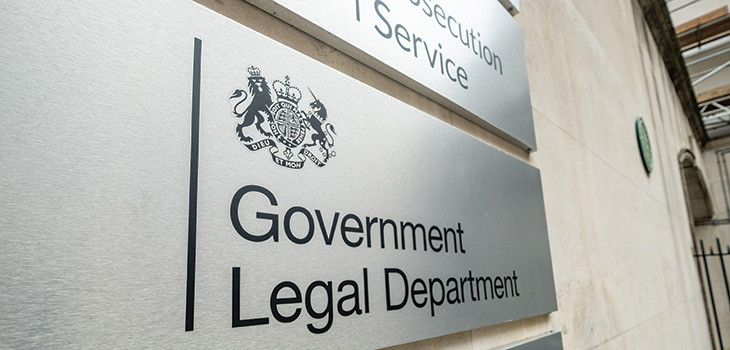
As the second female Treasury Solicitor and Permanent Secretary to the Government Legal Department (GLD), one of my key aims is that we create an environment where everyone feels able to be themselves, uninhibited by their background. It is particularly crucial that as civil servants, government lawyers are representative of the society we serve. I believe we achieve this by integrating principles of fairness and inclusion into everything we do—from recruitment to training and career development.

I hope that our ambition to become a truly national organisation will also play an important role in this agenda. I want those joining GLD to have access to all the career opportunities available from whichever location they are based. No longer will

If you are not a subscriber, subscribe now to read this content
If you are already a subscriber sign in
...or Register for two weeks' free access to subscriber content

MOVERS & SHAKERS

Clarke Willmott—Matthew Roach

Clarke Willmott—Matthew Roach

Partner joins commercial property team in Taunton office

Farrer & Co—Richard Lane

Farrer & Co—Richard Lane

Londstanding London firm appoints new senior partner

Bird & Bird—Sue McLean

Bird & Bird—Sue McLean

Commercial team in London welcomes technology specialist as partner

NEWS
What safeguards apply when trust corporations are appointed as deputy by the Court of Protection? 
Disputing parties are expected to take part in alternative dispute resolution (ADR), where this is suitable for their case. At what point, however, does refusing to participate cross the threshold of ‘unreasonable’ and attract adverse costs consequences?
When it comes to free legal advice, demand massively outweighs supply. 'Millions of people are excluded from access to justice as they don’t have anywhere to turn for free advice—or don’t know that they can ask for help,' Bhavini Bhatt, development director at the Access to Justice Foundation, writes in this week's NLJ
When an ex-couple is deciding who gets what in the divorce or civil partnership dissolution, when is it appropriate for a third party to intervene? David Burrows, NLJ columnist and solicitor advocate, considers this thorny issue in this week’s NLJ
NLJ's latest Charities Appeals Supplement has been published in this week’s issue
back-to-top-scroll