


The trajectory of The Ripple Pond presents not merely a story of charitable growth, but a pointed illustration of the enduring gaps within the United Kingdom’s legal and welfare frameworks for carers of injured Armed Forces personnel and veterans. For readers of New Law Journal, it also raises a more immediate question: what role should the legal profession play in sustaining organisations that are, in effect, compensating for those gaps?
Established in 2012 by two mothers whose son’s returned home from conflict with injuries, The Ripple Pond arose in response to a conspicuous absence. While at that time, policy and public attention had increasingly focused on injured service personnel, the lived realities of their families, who frequently assume lifelong caring responsibilities remained insufficiently addressed. These carers were and continue to be, required to navigate a labyrinth of statutory entitlements, discretionary support and fragmented service provision, often without clear guidance or advocacy.
From modest beginnings as a peer-support initiative, the charity has developed into a structured, multi-regional network offering both in-person and remote services. Its model, rooted in shared experience, has proven both resilient and uniquely effective. Facilitated groups, one-to-one engagement and informed signposting now form part of a broader ecosystem of support that extends across the UK. Workshops are led by a beneficiary turned employee and art classes are also led by a beneficiary, who is a qualified art therapist. Importantly, this evolution has occurred without abandoning the organisation’s founding principle, that those best placed to support carers are often carers themselves.
However, the growth of The Ripple Pond should not be mistaken for the resolution of the challenges it was created to address. Behind that growth are thousands of individuals still facing the same daily realities: trying to carve out moments of rest that rarely come, balancing employment with unpredictable caring responsibilities and making sense of systems that often feel complex and impersonal. These are not distant or theoretical difficulties; they are lived experiences that shape routines, relationships and wellbeing over the long term.
For many carers, the strain is cumulative. What begins as a commitment to support a loved one can evolve into a role that touches every aspect of life, often without clear guidance or consistent support. The result is a community of people who, despite their resilience, can feel overlooked and stretched thin.
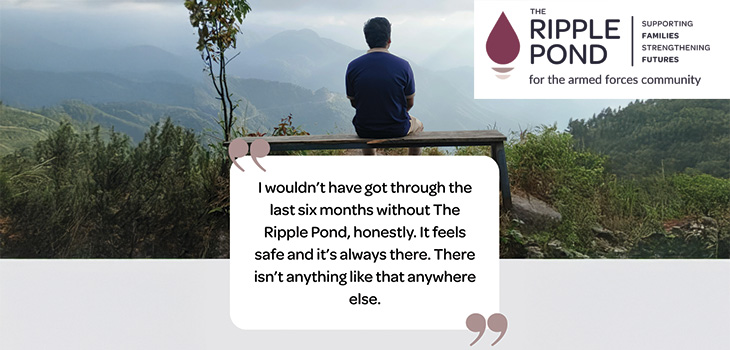
It is within this context that The Ripple Pond performs a function that extends beyond conventional charitable activity. It provides not only a space for shared understanding, but also a pathway, often informal yet highly effective, through which carers can begin to make sense of their options and find appropriate support before reaching crisis point.
This preventative, human-centred support rarely appears in statistics, yet its impact is profound. By intervening early, through connection, shared experience and practical reassurance, the charity helps to ease pressures before they become overwhelming. In doing so, it not only supports individual carers, but also lessens the wider strain on the systems they would otherwise have to navigate alone.
Yet, despite its demonstrable impact, The Ripple Pond operates within the financial constraints typical of the voluntary sector. Its continued ability to provide support, let alone to expand in response to growing demand, is contingent upon external funding. Unlike statutory bodies, it has no guaranteed resource base. Also, unlike commercial entities, it does not generate revenue through its activities.
For the legal profession, this presents a compelling case for engagement that goes beyond pro bono advice or policy advocacy. Financial support, whether through firm-led charitable initiatives or individual contributions, offers a direct and immediate means of reinforcing a service that aligns closely with the profession’s broader commitment to access to justice.
There is, moreover, a certain professional coherence in doing so. Legal practitioners are uniquely positioned to appreciate the consequences of systemic shortfall. The cases that escalate unnecessarily, the rights that go unenforced and the individuals who fall between institutional boundaries. Supporting organisations such as The Ripple Pond is not simply an act of philanthropy, it is a pragmatic investment in a more navigable and humane legal landscape.
The charity’s progress over the past decade is notable . It has moved from a small, localised initiative to a nationally recognised network, trusted by those it serves and respected within the wider Armed Forces community. But its continued expansion is driven not by surplus capacity, but by persistent need. Carers today face many of the same challenges that existed at the organisation’s founding.
In that respect, the question is not whether The Ripple Pond has proven its value, but whether it can continue to meet the demand placed upon it. For a profession grounded in the principles of fairness, accountability and the rule of law, the answer to that question should not be left to chance.
Please find out more about leaving a legacy or donating today – your support can make all the difference.
www.theripplepond.org/giveback
Email: help@theripplepond.org Telephone: 0333 900 1028 www.theripplepond.org


