

THIS ISSUE
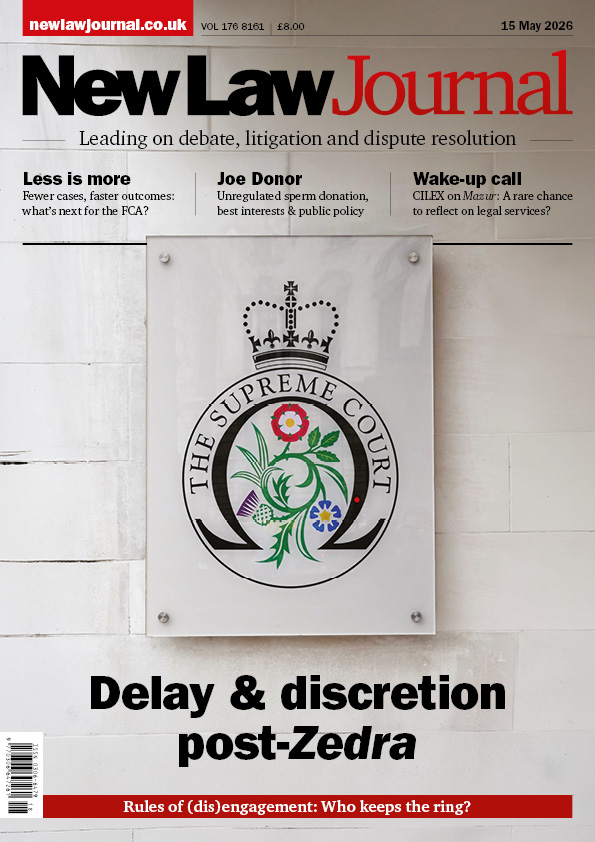

The High Court’s refusal to recognise a prolific sperm donor as a child’s legal parent has highlighted the risks of informal conception arrangements, according to Liam Hurren, associate at Kingsley Napley, in NLJ this week

The date-of-breach rule remains central to contractual damages, yet courts continue to recognise important exceptions: Ian Gascoigne explores the evolving case law
The Court of Appeal’s decision in Mazur may have settled questions around litigation supervision, but the profession should not simply ‘move on’, argues Jennifer Coupland, CEO of CILEX, in this week's NLJ
A simple phrase like ‘subject to references’ may not protect employers as much as they think. Writing in NLJ this week, Ian Smith, barrister and emeritus professor of employment law at UEA, analyses recent employment cases showing how conditional job offers can still create binding contracts
Liam Hurren reports on the legal & ethical risks highlighted by the recent Joe Donor case
Mark Pawlowski asks the unromantic question of who keeps the ring, and when, if a couple split
How many employment lawyers can dance on the head of a pin? Ian Smith weighs up the latest cases & celebrates the calm before the storm
Fewer cases, faster outcomes? James Tyler considers the future of enforcement at the Financial Conduct Authority
A recent decision has provided long-awaited clarity on how medical reporting organisations can fairly recover costs, writes Kris Kilsby

MOVERS & SHAKERS


Bellevue Law—Sara Mason
Bellevue Law expands workplace law offering with specialist healthcare regulatory appointment

Seddons GSC—Peter Ames
Seddons GSC strengthens Dispute Resolution team with partner hire

Taylor Rose—four promotions
Taylor Rose announces partner promotions
NEWS
Group claims, disputed costs and judicial recruitment dominate the latest courtroom round-up
Landlords face fresh registration duties as procedural reforms reshape the civil courts
Sanctions can derail commercial disputes long before judgment, making early planning essential
Pressure is mounting for a dedicated UK AI law, but deciding what it should achieve remains the central challenge
Legal professional privilege has checked the SRA’s investigative powers, exposing difficult questions about tackling suspected abusive litigation
Copyright © 2026 LexisNexis

