header-logo header-logo

15 May 2026 / Liam Hurren
Issue: 8161 / Categories: Features , Family , Public , Health , Child law
printer mail-detail

Unregulated sperm donation, best interests & public policy

249523
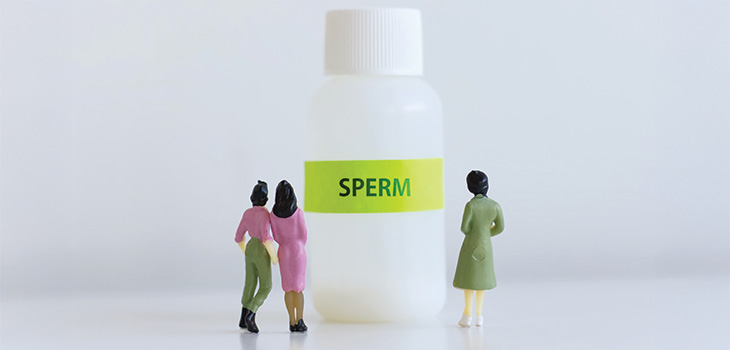
© Shutterstck/MyBears
Liam Hurren reports on the legal & ethical risks highlighted by the recent Joe Donor case
  • Sir Andrew McFarlane refused the sperm donor’s application to be recorded as the child’s legal parent on the basis that to do so would be manifestly contrary to public policy.
  • The case acts as a warning of the inherent risks for all prospective parents who are considering having children without the support of a UK licensed fertility clinic.

Beginning with the factual background, the recent case Re N (paternity: unregulated sperm donor) [2026] EWHC 878 (Fam) (referred to in the media as the ‘Joe Donor’ case) concerned a child (‘N’) who was born in autumn 2021 having been conceived using sperm provided by the applicant, Mr Robert Albon—a prolific unregulated sperm donor, said to have fathered some 180 children.

Mr Albon attended the home of JE (the mother) and EF (her partner) on two occasions, and N was conceived after the second donation. There was no discussion

If you are not a subscriber, subscribe now to read this content
If you are already a subscriber sign in
...or Register for two weeks' free access to subscriber content

MOVERS & SHAKERS

NLJ Career Profile: Nikki Bowker, Devonshires

NLJ Career Profile: Nikki Bowker, Devonshires

Nikki Bowker, head of litigation and dispute resolution at Devonshires, on career resilience, diversity in law and channelling Elle Woods when the pressure is on

Ellisons—Sarah Osborne

Ellisons—Sarah Osborne

Leasehold enfranchisement specialist joins residential property team

DWF—Chris Air

DWF—Chris Air

Firm strengthens commercial team in Manchester with partner appointment

NEWS
Contract damages are usually assessed at the date of breach—but not always. Writing in NLJ this week, Ian Gascoigne, knowledge lawyer at LexisNexis, examines the growing body of cases where courts have allowed later events to reshape compensation
The Supreme Court has restored ‘doctrinal coherence’ to unfair prejudice litigation, writes Natalie Quinlivan, partner at Fieldfisher LLP, in this week' NLJ
The High Court’s refusal to recognise a prolific sperm donor as a child’s legal parent has highlighted the risks of informal conception arrangements, according to Liam Hurren, associate at Kingsley Napley, in NLJ this week
The Court of Appeal’s decision in Mazur may have settled questions around litigation supervision, but the profession should not simply ‘move on’, argues Jennifer Coupland, CEO of CILEX, in this week's NLJ
A simple phrase like ‘subject to references’ may not protect employers as much as they think. Writing in NLJ this week, Ian Smith, barrister and emeritus professor of employment law at UEA, analyses recent employment cases showing how conditional job offers can still create binding contracts
back-to-top-scroll