

THIS ISSUE


Former District Judge and NLJ columnist Stephen Gold writes in this week’s Civil Way about the ‘sacrilege’ of the closure of the Mayor’s and City of London Court, the latest ‘pea green’ fashion in family law tomes, and the scandalous ‘repayments whizz’ of the 0.5% interest rate of HMRC repayments
In an NLJ expert witness supplement this week, forensic accountant George Sim, of Sim Kapila, puts forward arguments for and against single joint experts, while expert witness trainer Bond Solon founder Mark Solon looks at the expert’s fundamental duty to assist the court
A part-year music teacher who works irregular hours but has a continuing contract is entitled to the same statutory paid leave as full-time employees, the Supreme Court has held in a landmark judgment
Costs to be capped to protect individuals
Solicitors representing clients in creative fields face a much harder task when bring claims for financial losses, Suzanne Trask, partner at Bolt, Burdon Kemp, writes in this week’s NLJ. They must present more evidence and work harder to portray as clear a position as possible
The Criminal Bar Association (CBA) has now moved the barrister strikes into its alternating weeks phase, as negotiations with the Ministry of Justice (MoJ) have stalled
MoJ to follow in Canada’s footsteps with mandatory mediation
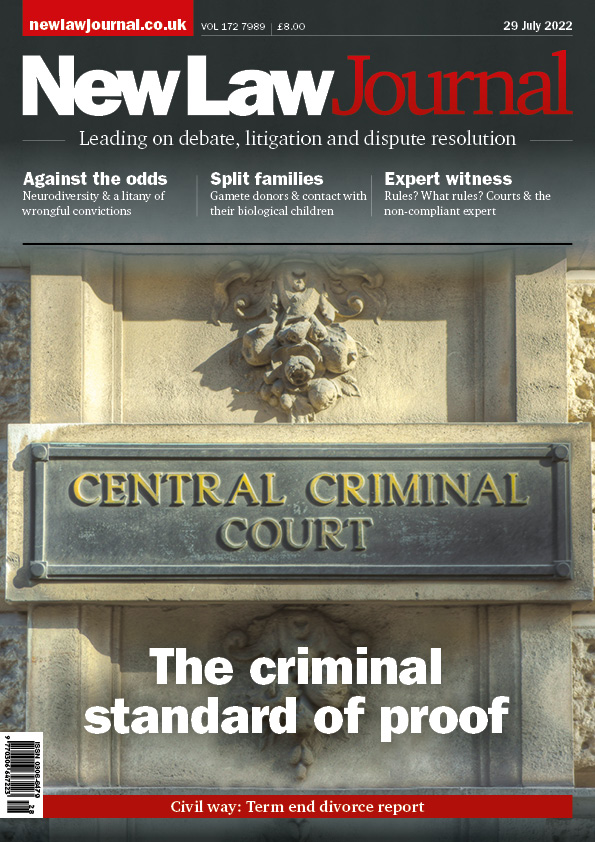
What does ‘sure’ mean, when directing a jury on the standard of proof? Writing in this week’s NLJ, Paul McKeown, City University associate professor of law, looks at this nebulous, challengeable word, which leads to what judges call ‘dreaded questions’ from the jury
Progress in improving support for women in prisons is slow and limited, the Justice Committee has warned
The formidable legal Twitterati has come under the watchful eye of regulators concerned about the reputation of the profession


MOVERS & SHAKERS


Weightmans—Jason Slatcher
Weightmans appoint new Chief Technology Officer

Mishcon de Reya—trainees
Mishcon de Reya announces trainee retention rate of 86%

Sackers—Charlotte Adams & Fraser Sutton
Sackers welcomes two new Graduate Solicitor Apprentices
NEWS
LexisNexis will mark the 80th anniversary of Shawcross and Beaumont on Air Law with a live podcast exploring the evolution of aviation law from the Chicago Convention to the challenges facing modern aerospace, taking place on Tuesday 29 September
Harmony Christian Ministries is the latest charity to benefit from a £500 donation from AlphaBiolabs via the company’s Giving Back initiative
Indemnity costs remain exceptional, but parties cannot ignore a case that deteriorates around them. In Lawrence v Associated Newspapers, Mr Justice Nicklin ordered the claimants to pay indemnity costs after finding their conduct, viewed cumulatively, fell ‘well outside the norm’
Public law is in flux following reversals and robust appellate intervention, according to the latest public law update by the team at HSFK for NLJ
Neurotechnology is turning the human mind into an operational domain, exposing gaps in the laws of war
Copyright © 2026 LexisNexis

