header-logo header-logo

A ‘total failure of safeguarding’

217914
What emerged from the hearings of the Thirlwall Inquiry & what are its likely final recommendations? Richard Scorer reports on the troubling picture it painted

In 2023, following a series of collapses and deaths of babies in the neonatal unit at the Countess of Chester Hospital in 2015–16, former nurse Lucy Letby was sentenced to life imprisonment and a whole life order in respect of seven counts of murder and seven counts of attempted murder. In 2024, Letby was found guilty of a further count of attempted murder.

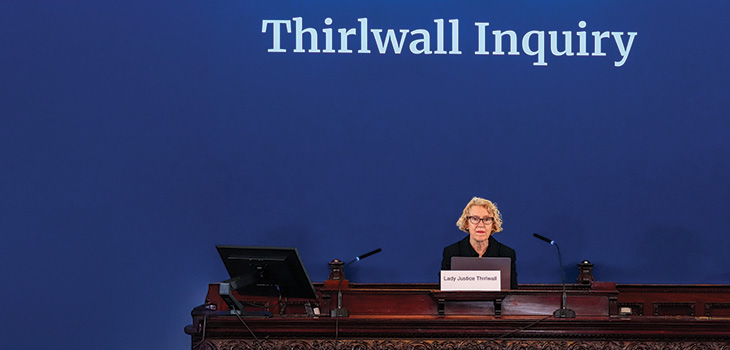
Following her conviction, a public inquiry was established under the chairmanship of Lady Justice Thirlwall. The inquiry’s terms of reference required investigation of three broad areas: the experiences of the parents of the babies named in the criminal indictment against Letby in hospital and other NHS services; the conduct of those working at the Countess of Chester Hospital with regard to the actions of Letby, including whether the police and other external bodies should have been informed earlier about

If you are not a subscriber, subscribe now to read this content
If you are already a subscriber sign in
...or Register for two weeks' free access to subscriber content

MOVERS & SHAKERS

NLJ Career Profile: Stephen Ward, The Barrister Group

NLJ Career Profile: Stephen Ward, The Barrister Group

From mowing lawns to life at the Bar: Stephen Ward reflects on an unconventional career

Clarke Willmott—Ben Loosemore

Clarke Willmott—Ben Loosemore

Commercial property partner joins Clarke Willmott in Southampton

Ellisons—Robert Tiffen

Ellisons—Robert Tiffen

Robert Tiffen joins Ellisons as Partner in growing Norwich office

NEWS
The Law Society RFC Festival of Sport returns next month, bringing together legal and financial services professionals for one of the sector’s largest annual sporting events
Legal aid deserts leave almost one in four without adequate access to justice
The Solicitors Regulation Authority (SRA) has warned solicitors and law firms that using artificial intelligence does not alter their professional obligations, amid concerns over inaccurate legal material and client confidentiality
From forgotten interest claims to case-management appeals, a string of procedural developments offers useful—and occasionally cautionary—lessons for practitioners

Jonathan Fisher KC highlights that it now accounts for around 40% of criminal offences, with roughly 70% involving technology, and argues that the UK cannot simply prosecute its way out of the problem. Detection, investigation and prosecution all require improvement, while different fraud types demand tailored responses.

back-to-top-scroll