header-logo header-logo

Asbestos records & mixed injury whiplash

171882
Vijay Ganapathy analyses an appeal of two historic tort cases while Claire Spearpoint discusses mixed injury claims
  • The Court of Appeal considered whether defendants should have been aware of the dangers of low-level asbestos exposure in the 1950s.
  • Clarity was provided by a Supreme Court ruling relating to the Whiplash Injury Regulations 2021 in mixed injury cases.

In March 2024, the appeal courts handed down two eagerly awaited judgments.

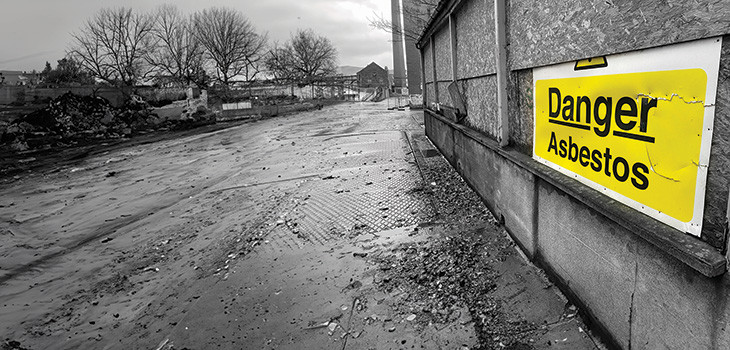
The first of these centred on whether defendants should owe a duty of care to those who develop respiratory disease from low-level asbestos exposure where the alleged tort occurred many decades in the past. While asbestos was known to be dangerous right from the start of the 20th century, there appears some uncertainty as to whether low-level exposure was harmful until just after 1960, when the link between this and mesothelioma (a terminal cancer of the lung lining) was discovered.

In White and others v Secretary of State for Health and Social Care; Cuthbert (executrix of

If you are not a subscriber, subscribe now to read this content
If you are already a subscriber sign in
...or Register for two weeks' free access to subscriber content

MOVERS & SHAKERS

Clarke Willmott—Matthew Roach

Clarke Willmott—Matthew Roach

Partner joins commercial property team in Taunton office

Farrer & Co—Richard Lane

Farrer & Co—Richard Lane

Londstanding London firm appoints new senior partner

Bird & Bird—Sue McLean

Bird & Bird—Sue McLean

Commercial team in London welcomes technology specialist as partner

NEWS
What safeguards apply when trust corporations are appointed as deputy by the Court of Protection? 
Disputing parties are expected to take part in alternative dispute resolution (ADR), where this is suitable for their case. At what point, however, does refusing to participate cross the threshold of ‘unreasonable’ and attract adverse costs consequences?
When it comes to free legal advice, demand massively outweighs supply. 'Millions of people are excluded from access to justice as they don’t have anywhere to turn for free advice—or don’t know that they can ask for help,' Bhavini Bhatt, development director at the Access to Justice Foundation, writes in this week's NLJ
When an ex-couple is deciding who gets what in the divorce or civil partnership dissolution, when is it appropriate for a third party to intervene? David Burrows, NLJ columnist and solicitor advocate, considers this thorny issue in this week’s NLJ
NLJ's latest Charities Appeals Supplement has been published in this week’s issue
back-to-top-scroll