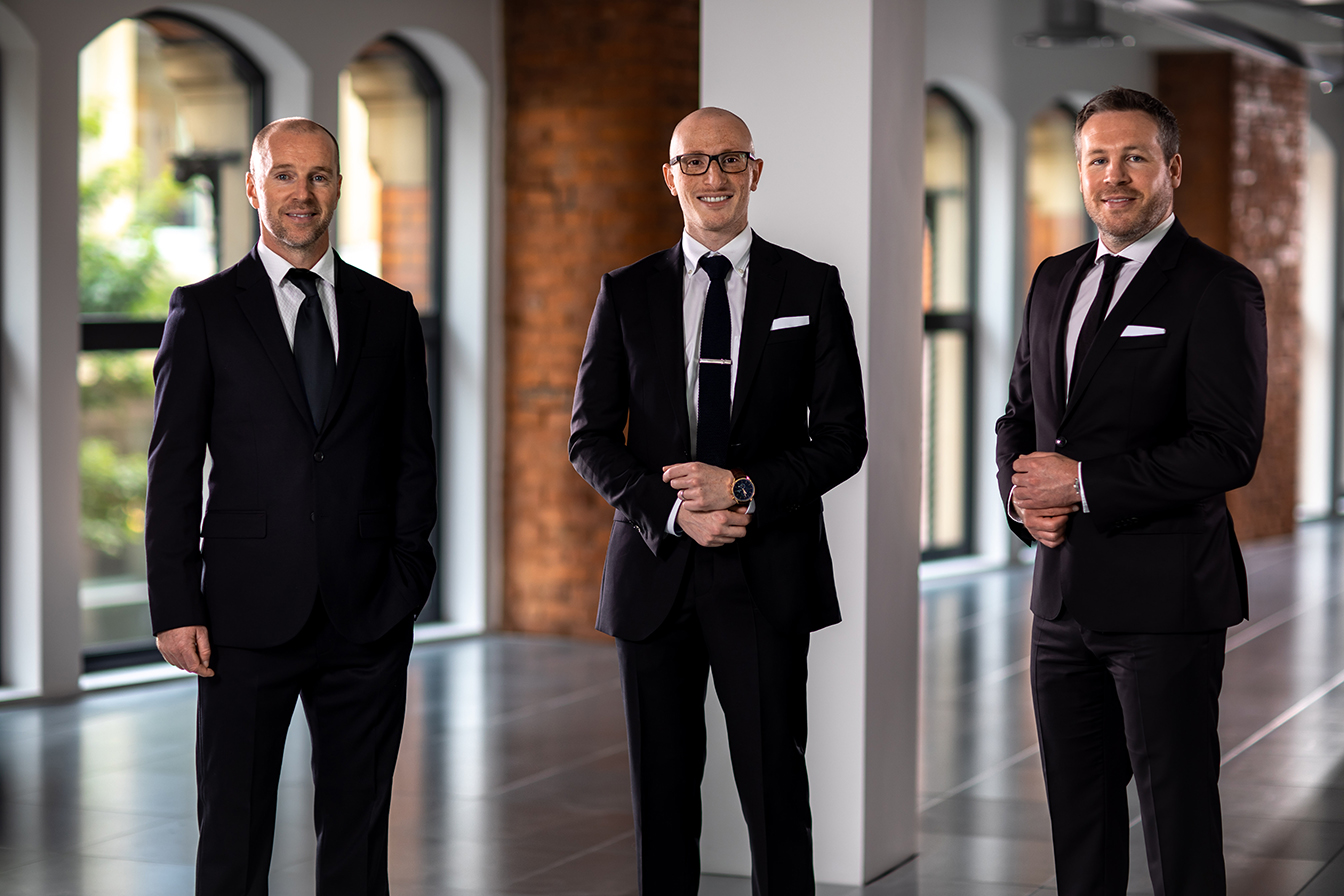
Law firm Beyond Corporate has announced the appointments of three additions to the real estate and construction teams—partner Owen McKenna, construction associate Moe Yassin, and solicitor Zaeem Habib.
Owen McKenna (pictured, right) has joined the firm from Harrison Drury & Co, and previously held roles with DWF and Brabners. His experience includes freehold and leasehold sales and acquisitions, and development funding, together with landlord and tenant and portfolio management work. He works predominantly with entrepreneurial property businesses and developers across industrial, retail, office and leisure sectors.
Moe Yassin (centre) has joined Beyond from DWF; he is experienced in both contentious and non-contentious construction law, advising a wide portfolio of clients including private developers, contractors, subcontractors and local government. He also advises on a range of construction related matters within the energy sector. His core focus areas are preventive dispute resolution and adjudication.
Zaeem Habib advises on a wide range of property issues, including freehold and leasehold acquisitions and disposals, landlord and tenant matters, real estate finance, and development and project work.
James Flynn (left), who leads the real estate and construction teams, said: ‘Owen, Moe and Zaeem are quality additions to the team, adding strength to the team as demand for our services continues to grow. Despite the pandemic, we have found that a lot of areas of the property market remain busy, and we are seeing a lot of activity across our sectors of expertise, in particular care, residential, energy and logistics. We also have a very healthy new business pipeline so we are delighted to have been able to increase our reach across both Real Estate and Construction.’
Matt Fleetwood, head of Beyond Group, added: ‘We are beginning to see growth in Real Estate and both contentious and non-contentious construction businesses; these appointments reinforce our commitment to continued investment in the right people at the right time. We don’t recruit for the sake of adding numbers or bums on seats, but rather we target those people who can grow our business and add to the diverse and vibrant culture we created, and are dedicated to maintaining, within a highly traditional industry.’