header-logo header-logo

11 February 2022 / Mandeep Bassi
Issue: 7966 / Categories: Features , Profession , Property , Conveyancing
printer mail-detail

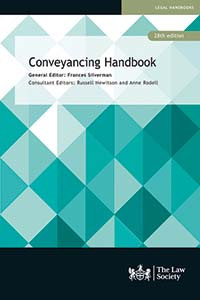
Book review: Conveyancing Handbook (28th edition)

"The Conveyancing Handbook is an essential item for every practitioner specialising in property law"

General editor: Frances Silverman

Consultant editors: Russell Hewitson & Anne Rodell

Publisher: The Law Society

ISBN: 9781784461737

RRP: £110


The Law Society’s Conveyancing Handbook is aimed at modern practitioners working in the increasingly complex and fast paced world of property law. The preface makes express reference to the issues being faced by practitioners during the ongoing COVID-19 pandemic and the issues which are garnering press attention at this time, such as escalating ground rents and cladding. The handbook is clearly a modern reference book which is practical and not just academic in nature. The general editor is Frances Silverman, a solicitor who sits in the First-tier Property Tribunal, and is at the cutting edge of property law and practice.

The nature of the handbook is more modern as rather than including the full text of the Solicitors Regulation Authority (SRA) principles and codes of conduct reference is made to the web page where the latest

If you are not a subscriber, subscribe now to read this content
If you are already a subscriber sign in
...or Register for two weeks' free access to subscriber content

MOVERS & SHAKERS

Thackray Williams—Lucy Zhu

Thackray Williams—Lucy Zhu

Dual-qualified partner joins as head of commercial property department

Morgan Lewis—David A. McManus

Morgan Lewis—David A. McManus

Firm announces appointment of next chair

Burges Salmon—Rebecca Wilsker

Burges Salmon—Rebecca Wilsker

Director joins corporate team from the US

NEWS
What safeguards apply when trust corporations are appointed as deputy by the Court of Protection? 
Disputing parties are expected to take part in alternative dispute resolution (ADR), where this is suitable for their case. At what point, however, does refusing to participate cross the threshold of ‘unreasonable’ and attract adverse costs consequences?
When it comes to free legal advice, demand massively outweighs supply. 'Millions of people are excluded from access to justice as they don’t have anywhere to turn for free advice—or don’t know that they can ask for help,' Bhavini Bhatt, development director at the Access to Justice Foundation, writes in this week's NLJ
When an ex-couple is deciding who gets what in the divorce or civil partnership dissolution, when is it appropriate for a third party to intervene? David Burrows, NLJ columnist and solicitor advocate, considers this thorny issue in this week’s NLJ
NLJ's latest Charities Appeals Supplement has been published in this week’s issue
back-to-top-scroll