


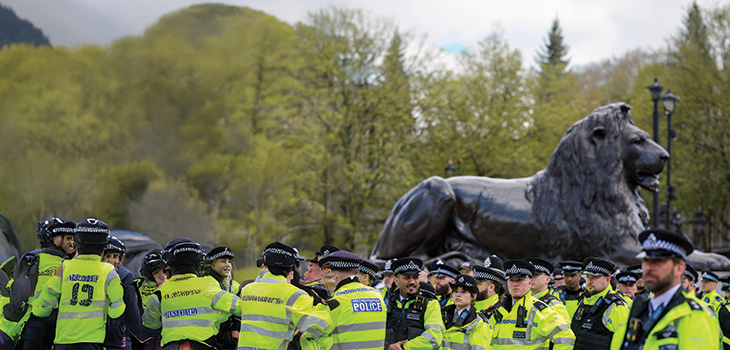
Writing in NLJ this week, the firm’s public law team highlights a Divisional Court ruling upholding police use of live facial recognition technology, finding it was ‘in accordance with the law’ because clear safeguards and proportionality requirements governed its deployment. The court stressed that broad discretionary powers are not automatically unlawful, provided there is a sufficient framework limiting arbitrary use.
The update also examines recent proportionality rulings from both the European Court of Human Rights and the Court of Appeal, including disputes over welfare benefits, VAT on private school fees and sanctions.
Elsewhere, the courts signalled a renewed willingness to police the true purpose behind public decisions, including a ruling that Croydon Council unlawfully used traffic schemes primarily to raise revenue. The message, the authors suggest, is that public bodies must do more than merely ‘pay lip service’ to legal safeguards.


