header-logo header-logo

10 February 2023 / David Walbank KC
Issue: 8012 / Categories: Features , Procedure & practice , Criminal , Public
printer mail-detail

Crime brief: 10 February 2023

110178
Misconduct which undermines public trust in the police clearly warrants severe punishment, says David Walbank KC
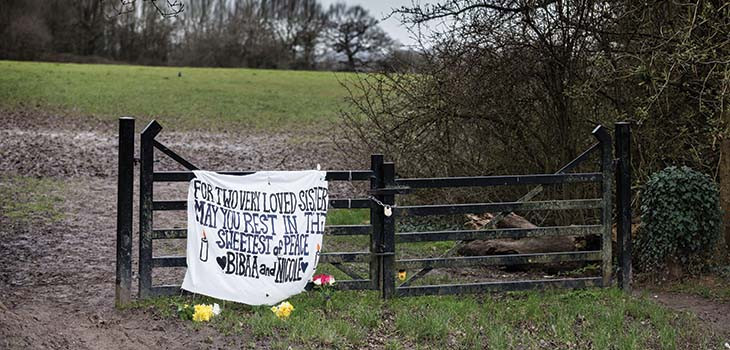
  • Double murder of sisters in London park.
  • Officers guarding crime scene took and distributed photographs of victims.
  • Sentencing for misconduct in public office.

It has been a difficult couple of years for the Met. London’s police force (assuming it is still acceptable to refer to the capital’s constabulary as a ‘force’ rather than a ‘service’) has found itself under pressure from all sides. Its policing of public demonstrations against continuing misogynistic violence in society, following the rape and murder of Sarah Everard by a serving police officer, elicited howls of protest. The heinous crimes of the serial rapist, David Carrick, and his sentencing hearing earlier this week, have shocked the nation. Its attempts to keep the metropolis moving, despite the best efforts of Extinction Rebellion and Just Stop Oil to bring gridlock to the streets, were met with weary resignation by angry commuters. Its decision-making in relation to COVID restriction-busting

If you are not a subscriber, subscribe now to read this content
If you are already a subscriber sign in
...or Register for two weeks' free access to subscriber content

MOVERS & SHAKERS

Thackray Williams—Lucy Zhu

Thackray Williams—Lucy Zhu

Dual-qualified partner joins as head of commercial property department

Morgan Lewis—David A. McManus

Morgan Lewis—David A. McManus

Firm announces appointment of next chair

Burges Salmon—Rebecca Wilsker

Burges Salmon—Rebecca Wilsker

Director joins corporate team from the US

NEWS
What safeguards apply when trust corporations are appointed as deputy by the Court of Protection? 
Disputing parties are expected to take part in alternative dispute resolution (ADR), where this is suitable for their case. At what point, however, does refusing to participate cross the threshold of ‘unreasonable’ and attract adverse costs consequences?
When it comes to free legal advice, demand massively outweighs supply. 'Millions of people are excluded from access to justice as they don’t have anywhere to turn for free advice—or don’t know that they can ask for help,' Bhavini Bhatt, development director at the Access to Justice Foundation, writes in this week's NLJ
When an ex-couple is deciding who gets what in the divorce or civil partnership dissolution, when is it appropriate for a third party to intervene? David Burrows, NLJ columnist and solicitor advocate, considers this thorny issue in this week’s NLJ
NLJ's latest Charities Appeals Supplement has been published in this week’s issue
back-to-top-scroll