header-logo header-logo

Law, camera, action!

15 October 2020 / Mark Pawlowski
Issue: 7906 / Categories: Features , Profession
printer mail-detail
29211
Mark Pawlowski looks at how law-related films can be useful in the legal classroom

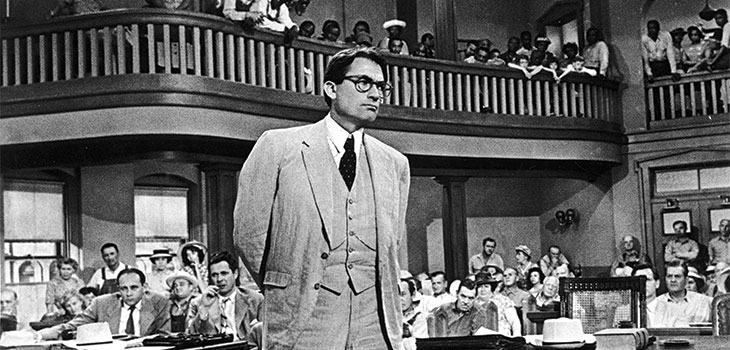
Increasingly in law schools, films with a legal theme are being used to identify how law and lawyers are perceived in various aspects of legal activity ranging from legal practice (ie, intrinsic lawyer skills including legal argument, negotiation and advocacy) to various aspects of the legal process (eg, the function of the judge and jury) as well as important elements of legal and ethical theory.

Classic films such as To Kill a Mockingbird, (1962), The Verdict, (1982) and Suspect, (1987) provide excellent examples of popular perceptions of men and women in the legal profession. The interesting question that emerges from these films is whether screen portrayals of lawyers actually reflect our popular cultural experience of what a lawyer should be like and what he (or she) should represent. There is, of course, no doubt that fictional portrayals do not match real life. What is interesting, however, is to see whether these images accurately reflect the

If you are not a subscriber, subscribe now to read this content
If you are already a subscriber sign in
...or Register for two weeks' free access to subscriber content

MOVERS & SHAKERS

DWF—Ed Williams

DWF—Ed Williams

Public sector disputes capability bolstered by partner hire in Leeds

Blake Morgan—Scott Hilton, Joan Yu & Melia Hirst

Blake Morgan—Scott Hilton, Joan Yu & Melia Hirst

Firm strengthens corporate, real estate and insolvency teams with partner trio

Seddons GSC—David Seal & Emma Clifford

Seddons GSC—David Seal & Emma Clifford

Consultant and solicitor join commercial real estate team

NEWS
Judging is ‘more intellectually demanding than any other role in public life’—and far messier than outsiders imagine. Writing in NLJ this week, Professor Graham Zellick KC reflects on decades spent wrestling with unclear legislation, fragile precedent and human fallibility
The long-predicted death of the billable hour may finally be here—and this time, it’s armed with a scythe. In a sweeping critique of time-based billing, Ian McDougall, president of the LexisNexis Rule of Law Foundation, argues in this week's NLJ that artificial intelligence has made hourly charging ‘intellectually, commercially and ethically indefensible’
From fake authorities to rent reform, the civil courts have had a busy start to 2026. In his latest 'Civil way' column for NLJ this week, Stephen Gold surveys a procedural landscape where guidance, discretion and discipline are all under strain
Fact-finding hearings remain a fault line in private family law. Writing in NLJ this week, Victoria Rylatt and Robyn Laye of Anthony Gold Solicitors analyse recent appeals exposing the dangers of rushed or fragmented findings
As the Winter Olympics open in Milan and Cortina, legal disputes are once again being resolved almost as fast as the athletes compete. Writing in NLJ this week, Professor Ian Blackshaw of Valloni Attorneys examines the Court of Arbitration for Sport’s (CAS's) ad hoc divisions, which can decide cases within 24 hours
back-to-top-scroll