header-logo header-logo

29 January 2016 / Funke Abimbola
Issue: 7684 / Categories: Features , Training & education , Profession
printer mail-detail

Lessons in gender diversity

nlj_7684_abimbola

Opening up or shutting out? Funke Abimbola turns the spotlight on the legal profession

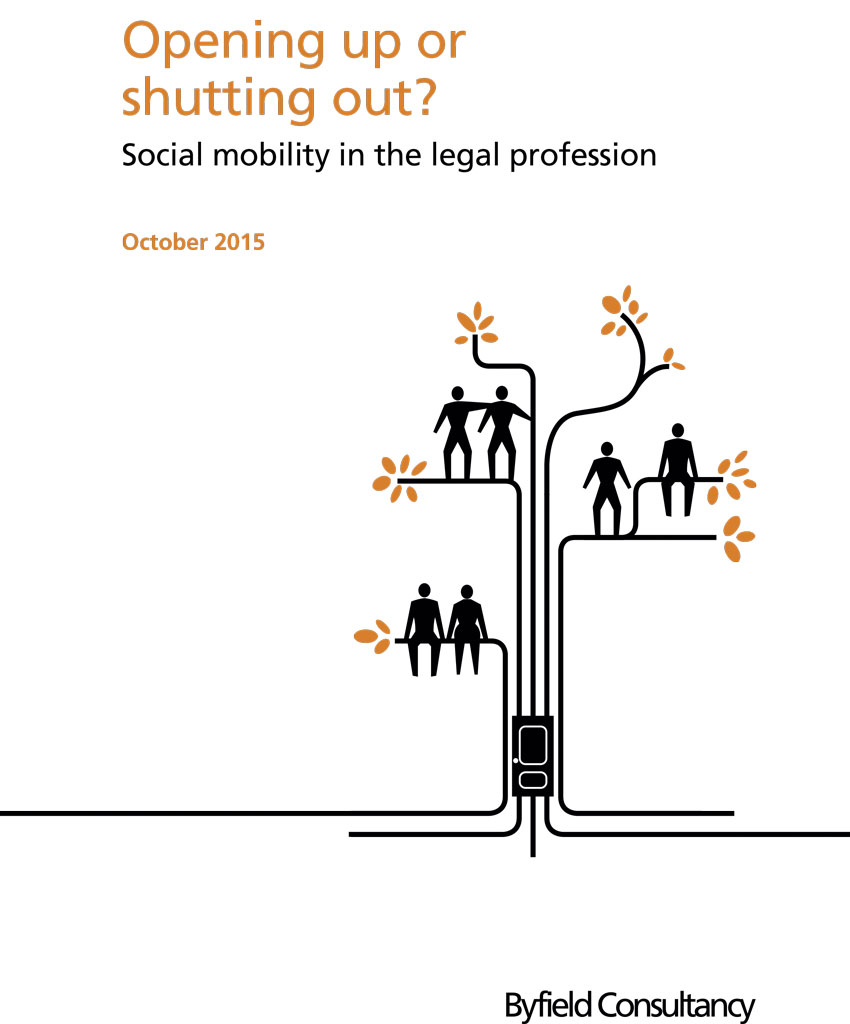
The legal profession continues to face a real crisis with the lack of progression of female lawyers. This issue is consistent across all arms of the profession but is particularly marked in the judiciary, the Bar and among the top 50 UK law firms. While the majority of trainees in the firms surveyed for our recent report on social mobility within the profession are female (58%), the proportion of women making it to partnership is disappointingly small—just 24% among the firms we surveyed. (Opening up or shutting out? Social mobility in the legal profession (October 2015) Abimbola and Byfield Consultancy).

This is particularly disheartening when the talent pool at trainee level is so female-heavy. Where does it all go wrong?

Diversity matters

The business case for diversity is a strong one. Recent research has shown that gender-diverse companies are 15% more likely to outperform the national industry median in terms of financial performance yet the legal profession has

If you are not a subscriber, subscribe now to read this content
If you are already a subscriber sign in
...or Register for two weeks' free access to subscriber content

MOVERS & SHAKERS

Freeths—Rachel Crosier

Freeths—Rachel Crosier

Projects and rail practices strengthened by director hire in London

DWF—Stephen Hickling

DWF—Stephen Hickling

Real estate team in Birmingham welcomes back returning partner

Ward Hadaway—44 appointments

Ward Hadaway—44 appointments

Firm invests in national growth with 44 appointments across five offices

NEWS
The Police and Criminal Evidence Act 1984 transformed criminal justice. Writing in NLJ this week, Ed Cape of UWE and Matthew Hardcastle and Sandra Paul of Kingsley Napley trace its ‘seismic impact’
Operational resilience is no longer optional. Writing in NLJ this week, Emma Radmore and Michael Lewis of Womble Bond Dickinson explain how UK regulators expect firms to identify ‘important business services’ that could cause ‘intolerable levels of harm’ if disrupted
Criminal juries may be convicting—or acquitting—on a misunderstanding. Writing in NLJ this week Paul McKeown, Adrian Keane and Sally Stares of The City Law School and LSE report troubling survey findings on the meaning of ‘sure’
The Serious Fraud Office (SFO) has narrowly preserved a key weapon in its anti-corruption arsenal. In this week's NLJ, Jonathan Fisher KC of Red Lion Chambers examines Guralp Systems Ltd v SFO, in which the High Court ruled that a deferred prosecution agreement (DPA) remained in force despite the company’s failure to disgorge £2m by the stated deadline
As the drip-feed of Epstein disclosures fuels ‘collateral damage’, the rush to cry misconduct in public office may be premature. Writing in NLJ this week, David Locke of Hill Dickinson warns that the offence is no catch-all for political embarrassment. It demands a ‘grave departure’ from proper standards, an ‘abuse of the public’s trust’ and conduct ‘sufficiently serious to warrant criminal punishment’
back-to-top-scroll