header-logo header-logo

12 January 2018 / Brice Dickson
Issue: 7776 / Categories: Features , In Court
printer mail-detail

In the line of duty: a year in the Supreme Court

nlj_7776_dickson

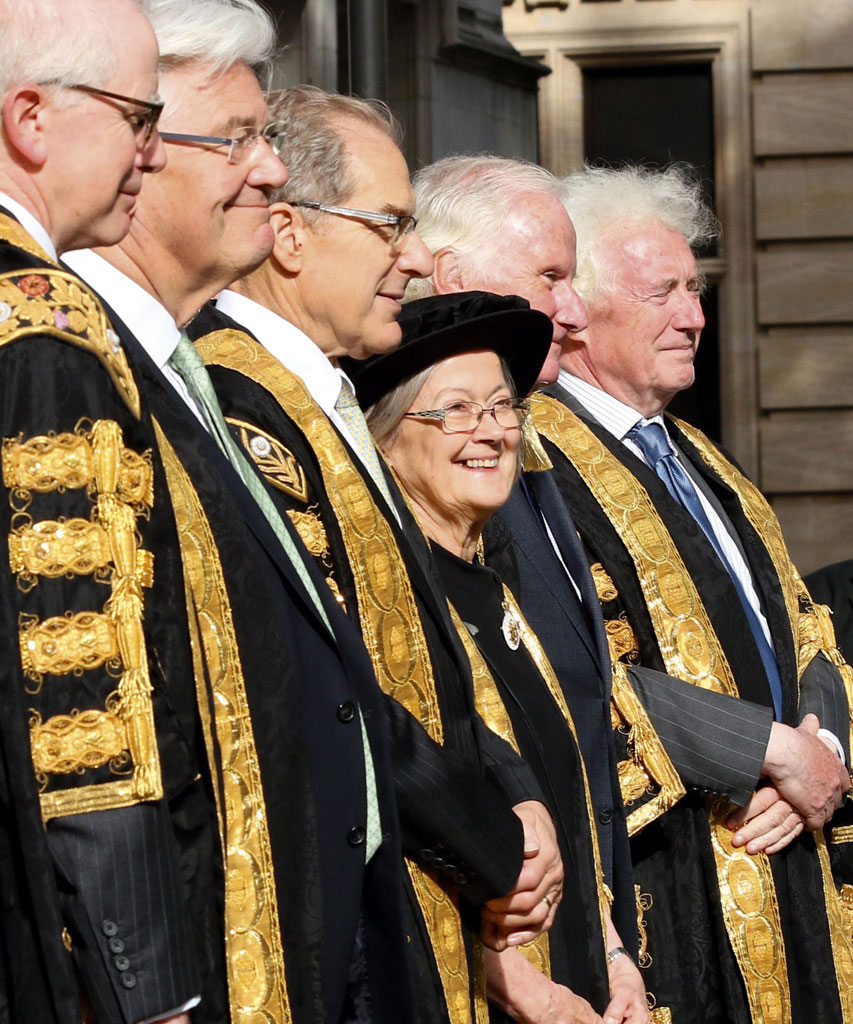
The Supreme Court in 2017. Brice Dickson reviews the personnel, judgments & output

2017 was an eventful year for the UK Supreme Court. It began with 11 Justices in post, each deliberating on Gina Miller’s claim that Article 50 of the Treaty for European Union should be triggered by Parliament and not by government. They held in her favour by 8 to 3 ([2017] UKSC 5), affirming the decision of the Divisional Court. The year ended with three new Justices in post, plus a different President and Deputy President.

Lord Neuberger, the outgoing President, retired in September, four months short of his 70th birthday. Lord Clarke retired at the same time, eight months short of his 75th birthday. Lord Neuberger can sit as a member of the supplementary panel of retired judges until 2023. Lord Toulson retired in September 2016 but sat as a supplementary judge on six occasions in early 2017. He delivered the Court’s sole judgment in two cases. Sadly, while undergoing heart surgery in June,

If you are not a subscriber, subscribe now to read this content
If you are already a subscriber sign in
...or Register for two weeks' free access to subscriber content

MOVERS & SHAKERS

Debevoise & Plimpton—Mary Lavelle

Debevoise & Plimpton—Mary Lavelle

Debevoise expands London secondaries team with addition of Mary Lavelle

Excello Law—Hestia Private Client

Excello Law—Hestia Private Client

Excello Law welcomes ex-Irwin Mitchell team to launch Hestia Private Client

Carpmaels & Ransford—Christopher Stothers

Carpmaels & Ransford—Christopher Stothers

Heavyweight patent litigator will bolster Carpmaels Ransford’s rapidly growing Litigation team as firm marks its 250th anniversary

NEWS
Lawyers have welcomed plans to create specialist rape and serious sex offences courtrooms at every Crown Court
The Supreme Court has settled a long-running dispute over part-time workers: unfavourable treatment need be a significant or effective cause, not the sole cause
Arbitration may be private, but its confidentiality is no impenetrable shield. Writing in NLJ this week, James Glaysher of Kingsley Napley examines when courts will permit arbitral material to surface in open litigation
A telecoms operator may be able to hold over under the Landlord and Tenant Act 1954, yet still be unable to secure a renewal: an outcome described as a legal ‘paradox’
The Financial Reporting Council’s revised Audit Enforcement Procedure will alter the balance of power in corporate investigations
back-to-top-scroll