header-logo header-logo

Litigation trends: The Brexit zeitgeist

litigationtrends_cover_2018

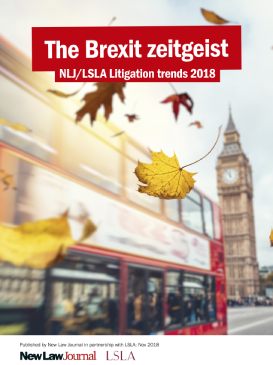
The ongoing uncertainty around the post-Brexit landscape, a vital appeal decision over legal professional privilege and disclosure reforms have been dominating the headlines for litigators.

In the latest of our exclusive NLJ/LSLA series of online surveys litigators share their predictions for the coming year. Fears over the stability of domestic and international dispute resolution in London have grown since the 2017 survey, with Brexit at the top of the list of causes followed by increased costs and competition from other jurisdictions. More respondents are predicting a flight of work post-Brexit and there are strong calls on the government to take “very urgent” action. Where litigators are positive is over the success of witness statements standing in as evidence in chief. Here we examine the key pressure points as politicians bargain over the UK’s future.

Download the attached pdf to read the survey findings in full.

If you are not a subscriber, subscribe now to read this content
If you are already a subscriber sign in
...or Register for two weeks' free access to subscriber content

MOVERS & SHAKERS

NLJ Career Profile: Sonya Sceats, the British Institute of International and Comparative Law

NLJ Career Profile: Sonya Sceats, the British Institute of International and Comparative Law

Sonya Sceats, next director and CEO of the British Institute of International and Comparative Law, discusses her long-standing mission to uphold and defend the rule of law

Anthony Collins—four appointments

Anthony Collins—four appointments

Property and commercial teams bolstered by senior hires

Keystone Law—Ben Knowles

Keystone Law—Ben Knowles

International arbitration specialist strenghtens the team

NEWS
Manchester’s online LLM has accelerated career progression for its graduates
Judging is ‘more intellectually demanding than any other role in public life’—and far messier than outsiders imagine. Writing in NLJ this week, Professor Graham Zellick KC reflects on decades spent wrestling with unclear legislation, fragile precedent and human fallibility
The long-predicted death of the billable hour may finally be here—and this time, it’s armed with a scythe. In a sweeping critique of time-based billing, Ian McDougall, president of the LexisNexis Rule of Law Foundation, argues in this week's NLJ that artificial intelligence has made hourly charging ‘intellectually, commercially and ethically indefensible’
From fake authorities to rent reform, the civil courts have had a busy start to 2026. In his latest 'Civil way' column for NLJ this week, Stephen Gold surveys a procedural landscape where guidance, discretion and discipline are all under strain
Fact-finding hearings remain a fault line in private family law. Writing in NLJ this week, Victoria Rylatt and Robyn Laye of Anthony Gold Solicitors analyse recent appeals exposing the dangers of rushed or fragmented findings
back-to-top-scroll