header-logo header-logo

22 May 2015 / Alec Samuels
Issue: 7653 / Categories: Features
printer mail-detail

The name game (Pt 1)

nlj_7653_backpage

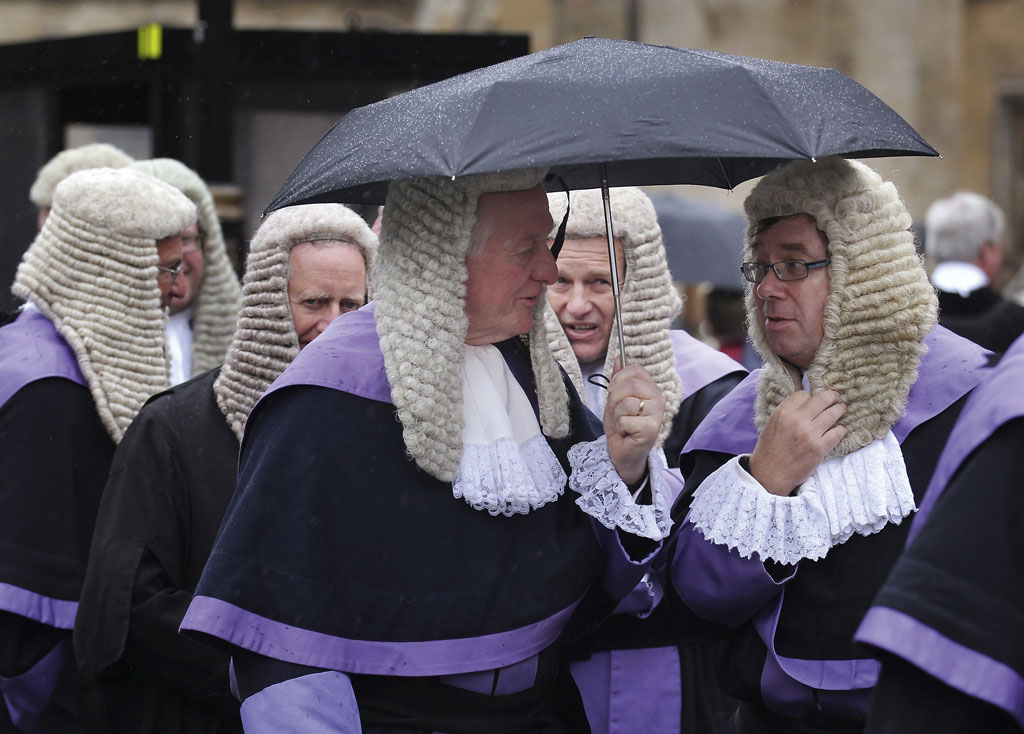
Why do we give our judges such curious titles? Alec Samuels solves the riddle in a new two-part series

All of us in the law understand the judicial titles, how to describe the judges and how to address them. But the man in the street, and the lay litigant and lay witness, often have no idea what it is all about. There is some merit in respecting historical origin and continuity leading to contemporary stability. However, when confusion or misunderstanding or mystery prevail it would seem to be time for modernisation and simplification. There is a case for a hierarchy of jurisdictions and a consequent hierarchy of judges, but the system should be logical and simple and intelligible.

Judge or justice?

These terms seem to be largely interchangeable. Though perhaps the judge holds the office of judge and is personally described as a justice.

The situation in the Supreme Court is becoming clear. The judges are Justices of the Supreme Court. The life peers are dying out. In due course all the judges

If you are not a subscriber, subscribe now to read this content
If you are already a subscriber sign in
...or Register for two weeks' free access to subscriber content

MOVERS & SHAKERS

Keystone Law—Milena Szuniewicz-Wenzel & Ian Hopkinson

Keystone Law—Milena Szuniewicz-Wenzel & Ian Hopkinson

International arbitration team strengthened by double partner hire

Coodes Solicitors—Pam Johns, Rachel Pearce & Bradley Kaine

Coodes Solicitors—Pam Johns, Rachel Pearce & Bradley Kaine

Firm celebrates trio holding senior regional law society and junior lawyers division roles

Michelman Robinson—Sukhi Kaler

Michelman Robinson—Sukhi Kaler

Partner joins commercial and business litigation team in London

NEWS
The Legal Action Group (LAG)—the UK charity dedicated to advancing access to justice—has unveiled its calendar of training courses, seminars and conferences designed to support lawyers, advisers and other legal professionals in tackling key areas of public interest law
As the drip-feed of Epstein disclosures fuels ‘collateral damage’, the rush to cry misconduct in public office may be premature. Writing in NLJ this week, David Locke of Hill Dickinson warns that the offence is no catch-all for political embarrassment. It demands a ‘grave departure’ from proper standards, an ‘abuse of the public’s trust’ and conduct ‘sufficiently serious to warrant criminal punishment’
Employment law is shifting at the margins. In his latest Employment Law Brief for NLJ this week, Ian Smith of Norwich Law School examines a Court of Appeal ruling confirming that volunteers are not a special legal species and may qualify as ‘workers’
Criminal juries may be convicting—or acquitting—on a misunderstanding. Writing in NLJ this week Paul McKeown, Adrian Keane and Sally Stares of The City Law School and LSE report troubling survey findings on the meaning of ‘sure’
The Serious Fraud Office (SFO) has narrowly preserved a key weapon in its anti-corruption arsenal. In this week's NLJ, Jonathan Fisher KC of Red Lion Chambers examines Guralp Systems Ltd v SFO, in which the High Court ruled that a deferred prosecution agreement (DPA) remained in force despite the company’s failure to disgorge £2m by the stated deadline
back-to-top-scroll