header-logo header-logo

06 October 2017
Issue: 7764 / Categories: Legal News , In Court
printer mail-detail

New legal year makes history

nlj_7764_greene

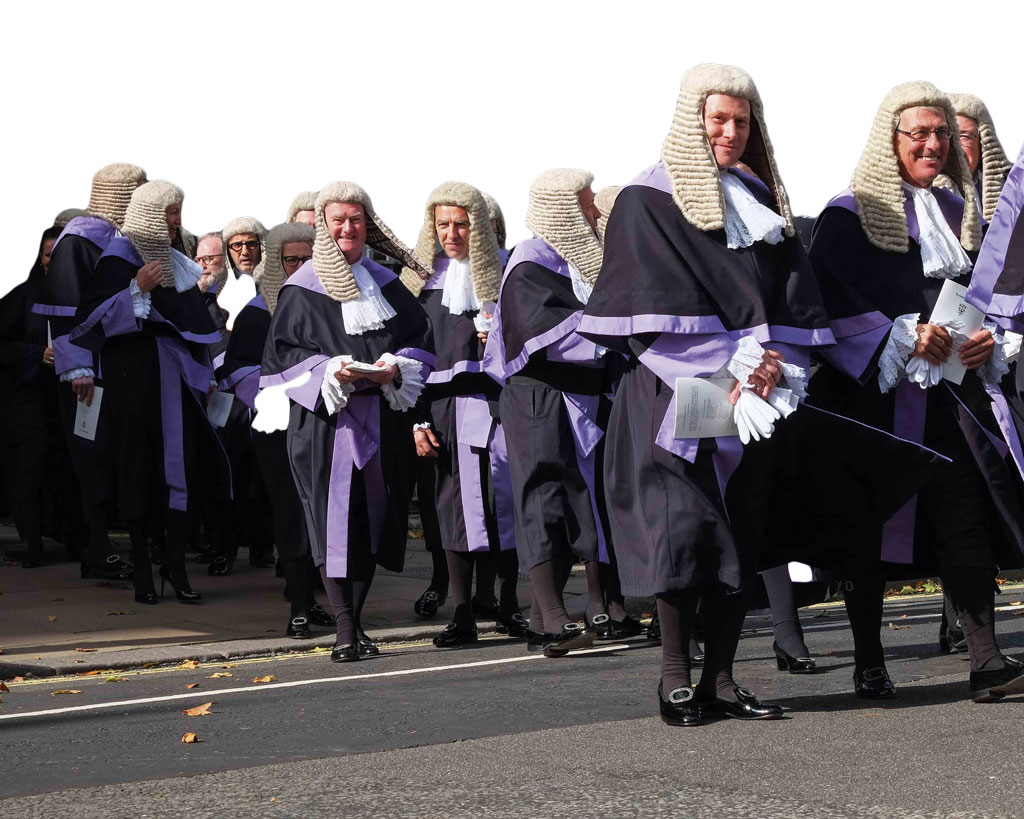
Sir Ian Burnett donned the robes of Lord Chief Justice this week while Lady Hale made history as the first woman President of the Supreme Court.

Sir Ian, who took over from Lord Thomas at a ceremony at the Royal Courts of Justice this week, practised common and public law from Temple Garden Chambers until 2008, when he joined the High Court. Notable cases included acting as leading counsel to the inquiry into the Southall rail crash, and as counsel to the inquests into the deaths of Diana, Princess of Wales and Dodi al Fayed. He said: ‘I believe we should be better at explaining our role and the vital importance of our independence and impartiality.’

Over at the Supreme Court, meanwhile, Lady Hale was sworn in as President along with Deputy President Lord Mance and three new Justices, Lady Black, Lord Lloyd-Jones and Lord Briggs.

Baroness Hale, who succeeds Lord Neuberger, pledged to ‘do right to all manner of people’ while saying her oaths. She was among the first cohort of Justices when the Supreme Court opened in 2009, and is a former academic and family law barrister at the Manchester Bar.

Issue: 7764 / Categories: Legal News , In Court
printer mail-details

MOVERS & SHAKERS

NLJ Career Profile: Stephen Ward, The Barrister Group

NLJ Career Profile: Stephen Ward, The Barrister Group

From mowing lawns to life at the Bar: Stephen Ward reflects on an unconventional career

Clarke Willmott—Ben Loosemore

Clarke Willmott—Ben Loosemore

Commercial property partner joins Clarke Willmott in Southampton

Ellisons—Robert Tiffen

Ellisons—Robert Tiffen

Robert Tiffen joins Ellisons as Partner in growing Norwich office

NEWS
The Law Society RFC Festival of Sport returns next month, bringing together legal and financial services professionals for one of the sector’s largest annual sporting events
Legal aid deserts leave almost one in four without adequate access to justice
The Solicitors Regulation Authority (SRA) has warned solicitors and law firms that using artificial intelligence does not alter their professional obligations, amid concerns over inaccurate legal material and client confidentiality
From forgotten interest claims to case-management appeals, a string of procedural developments offers useful—and occasionally cautionary—lessons for practitioners

Jonathan Fisher KC highlights that it now accounts for around 40% of criminal offences, with roughly 70% involving technology, and argues that the UK cannot simply prosecute its way out of the problem. Detection, investigation and prosecution all require improvement, while different fraud types demand tailored responses.

back-to-top-scroll