


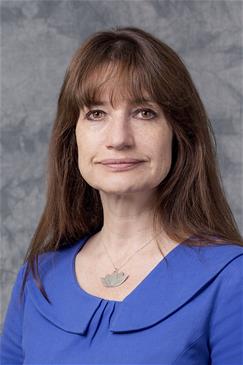
Haynes and Boone's new head of international arbitration shares her unconventional career beginnings with NLJ
What was your route into the profession?
It was perhaps not the most conventional one. I trained as an opera singer and did a year of musicology at the Sorbonne in Paris before getting cold feet about that career. I then applied to do a prestigious law course: the Anglo-French Double Maîtrise, run by King’s College in London and the Sorbonne in Paris. I was lucky to win a place on this four-year course, which led to me gaining an LLB as well as a Maîtrise (so a French law degree and an English law degree). After that, being a glutton for punishment, I did a part-time MSc in construction law and arbitration, while I was working as a newly-qualified lawyer.
What has been your biggest career challenge so far?
While still a relatively junior partner, I left a large English law firm to set up my own international arbitration team. Many industry colleagues kindly took the time to warn me about the risk of failure inherent in such a bold step. Whether by luck or by design (and perhaps a bit of both), we have thrived. I think it’s because we care deeply about our clients and treat them as we would wish to be treated ourselves by professionals.
Which person within the legal profession inspires you most?
I was trained by Chris Vigrass, recently retired from Ashurst, who could say more with a raised eyebrow than many can with a speech. I have also benefitted from quiet support from both John Uff QC, who tutored me on the MSc course, and Gary Born. I am also grateful to colleagues in the remarkably collegiate international arbitration industry, who have encouraged me along the way. More academically, Lord Bingham remains a guiding light—his book on the rule of law should be compulsory reading in schools.
If you weren’t a lawyer, what would you choose as an alternate career?
Writing. I love words, and I love communication.
Who is your favourite fictional lawyer?
Judge Dredd.
What change would you make to the profession?
I want to contribute to improving diversity. It goes without saying, doesn’t it?
How do you relax?
Discussions with trusted friends on everything from food to politics.There is certainly enough that warrants being debated at length these days.


