


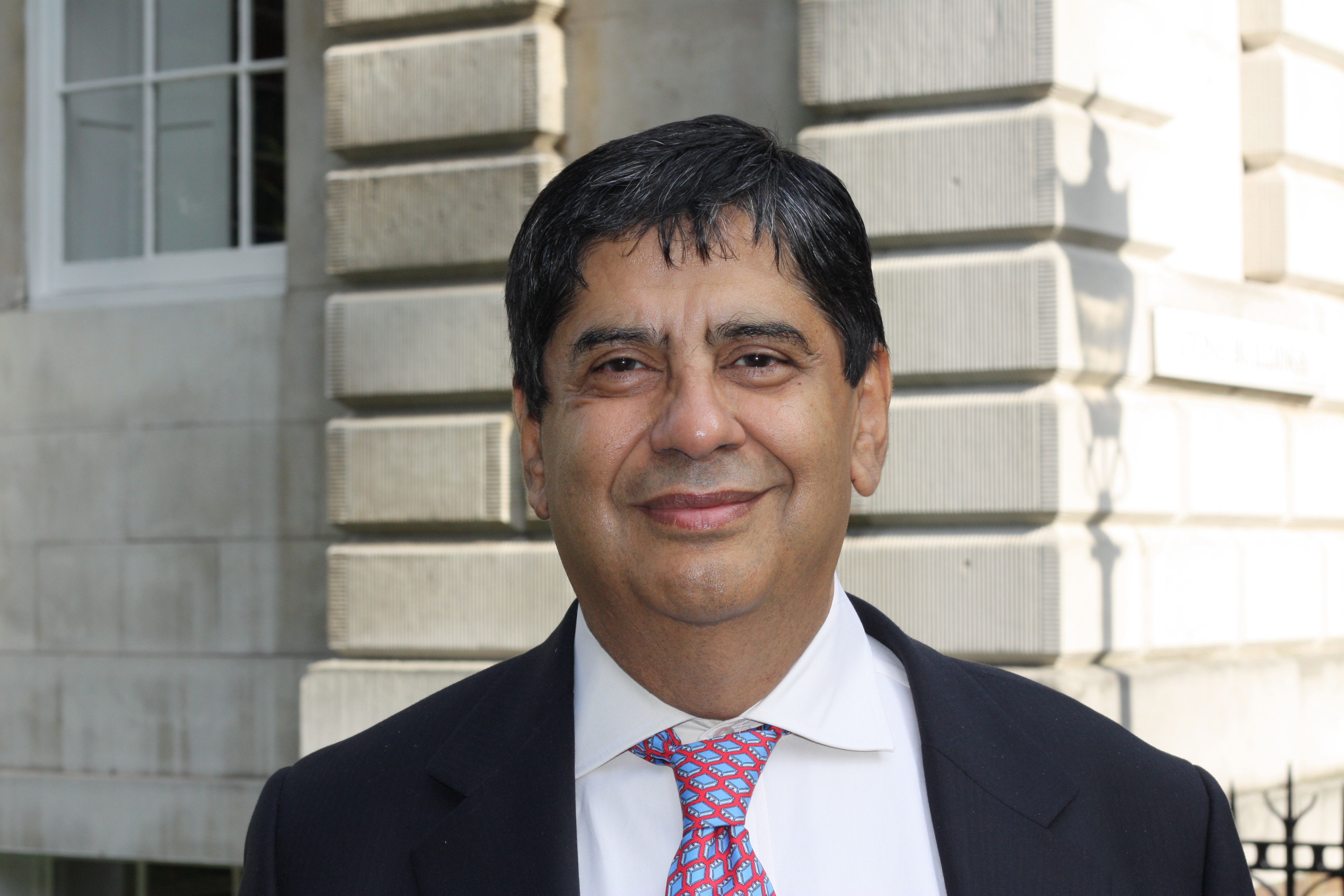
Sarosh Zaiwalla is the founder and senior partner of Zaiwalla & Co
You were recently honoured with the Lifetime Achievement Award at the Society of Asian Lawyers Annual Awards and Ball 2017. How did that feel?
I feel extremely honoured to have been recognised by the Society of Asian Lawyers. I have had phenomenal years in the legal industry and it’s exciting to see how the legal system is evolving. I am grateful to my team at Zaiwalla & Co for their support. It’s been an honour working side by side with them, a truly dynamic and trailblazing team, with profound international experience.
What was your route into the profession?
As a young student in St Xavier’s High School, Bombay, my career ambition was to join politics and become the Prime Minister of India so that I could change India and make it great again. My father was a solicitor who had qualified in London in 1925. He was the youngest member of his family and as the youngest member of my family, I was encouraged to qualify as a solicitor in London.
You founded your firm in 1982, have a strong international practice specialising in arbitration and litigation, and represent very high-profile clients. Can you share some secrets for success?
Vision—to have a vision in business is important. When I started my practice, I found that there was no quality law firm in the City of London which was founded by a non-white person. My vision was to build a multi-racial law firm where all that mattered was the colour of the heart, not the colour of skin, flag or religion.
Integrity and honest approach—this is the mantra which helped me to survive in English City of London culture. I became acceptable because people soon recognised my integrity and honest approach. Mistakes are made by all, including myself, but integrity and honesty will override these mistakes.
Open mind and out of the box approach—my firm today has a reputation where people from all over the world come to me for their very difficult cases. This is because I have in the past been known for succeeding through taking an out of the box legal approach to submissions with calm courage.
Let bygones be bygones—one of the common errors which failed businessmen make is to live in the past and hold grudges against perceived rivals. I have always considered this to be a waste of time. If things have gone wrong in my life I take responsibility for the consequences and learn from it, so I am able to move forward without casting blame on others. I follow the principle ‘make most of all that comes and least of all that goes’.
What has been your biggest career challenge so far?
The City of London had never seen a solicitors firm started by an Indian and there were racial hurdles, albeit perhaps unconsciously placed ones, which had to be overcome. Succeeding was made easier by the warmth and support I received from the majority of the City of London. I found almost all of the lawyers very courteous, even in difficult cases.
Can you tell us some of your notable achievements?
I founded Zaiwalla & Co solicitors in London, which is the first English solicitors firm in the one square mile commercial and financial district in the City of London started by a solicitor born outside Europe. We have been in existence for 36 years and at our 30th anniversary reception in November 2012, the Chief Guest, Rt Hon Sir Dominic Grieve MP in his speech said that what my firm had achieved in the development of English law will be remembered even after 100 years. There are today 104 reported judgments in the English law reports where my firm had acted for one of the parties. A judgment is only reported in the law reports if it affects the development of law. We are today one of the leading firms in the field of International Arbitration.
Zaiwalla & Co (along with Clifford Chance) was one of the first firms to enter into the Chinese legal market back in the 1990s and was instructed by the Chinese government in their first four arbitrations in London.
I am a Freeman of the City of London and a Livery Man of the Worshipful Company of World Traders. I have facilitated dialogues for The Dalai Lama with the Government of the Peoples Republic of China. I have also facilitated Third Channel confidential dialogue between the UK Prime Minister and the Chinese Government to resolve certain difficulties that had occurred relating to the Hong Kong handover in 1997.
My firm successfully acted for the Iranian private bank, Bank Mellat, both before the Supreme Court and the EU Court challenging the listing of the bank under Iran Nuclear Sanctions. As a consequence of this firm’s success, Bank Mellat today has a claim of USD 4 billion before the English Court in respect of damages for losses caused because of unlawful listing. This firm was also the first firm to successfully challenge in the EU Court the listing of Iranian companies by the EU Council. Securing Bank Mellat as a client, soon followed by other Iranian banks such as Bank Tejarat, has opened up a new practice area in a previously untapped market, which many City firms are now trying to emulate.
Which lawyer or person within the legal profession inspires you most?
The person I admire the most is Mahatma Gandhi known as the father of nation (India) —also a lawyer by profession. Gandhi Ji was not an orator like Jawahar Lal Nehru (first Prime Minster of India); he was not a writer of any skill. His philosophy was based on ancient Indian and also Bahai teachings. His greatest trait was being honest with himself and he showed the world that with honesty you can get what you want in the long term. I believe a lawyer does not have to lie for his client. He can protect the client’s interest by sheer intelligence and truth.
If you weren’t a lawyer, what would you choose as an alternate career?
I would choose a career which would enable me to influence evolving this world into a fairer world.
What change would you make to the profession?
I would like the legal profession in India to be more open to youngsters reaching the top without seeking patronage from their seniors. In India, the top layer of the profession is restricted to a few lawyers who are extremely expensive and who are not necessarily intellectually superior to many middle ranking lawyers. This trend is part of the old colonial system when 4,000 white British, including the Judges, were ruling 400 million Indians. The top layer of the legal profession in India was then monopolised by lawyers who had sought qualifications in London. This old imperialistic trend must now discontinue.
How do you relax?
I used to play cricket but not now. Watching cricket is very relaxing and it helps. My great relaxation now is going to my seaside country house in West Sussex.


.tmb-mov69x69.png?sfvrsn=9a8f1ea9_1)


