header-logo header-logo

24 April 2026
Issue: 8158 / Categories: Legal News , Criminal , In Court , Procedure & practice
printer mail-detail

NLJ this week: Jury cuts won’t cure court crisis

247614
© Martin Pope/ZUMA Press Wire/Shutterstock
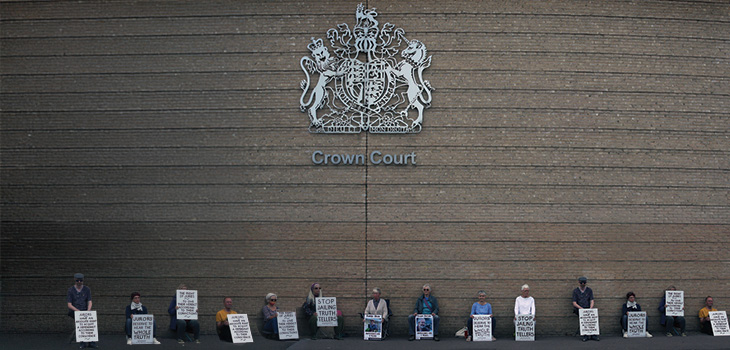
Plans to reduce jury trials risk missing the real problem in the criminal justice system. Writing in NLJ this week, David Wolchover of Ridgeway Chambers argues the crown court backlog is fuelled not by juries but weak cases slipping through a flawed ‘50%’ prosecution test

He says predicting conviction is ‘hit-and-miss and utterly futile’, forcing prosecutors to guess in ‘medium-strength’ cases. The result: too many trials that should never start.

Rather than curbing jury trial, Wolchover urges a stricter threshold—only cases where conviction is clearly more likely should proceed. Tightening screening, not diluting rights, could stem the ‘incalculably large’ flow overwhelming the system.

MOVERS & SHAKERS

Signature Litigation—Catherine Naylor

Signature Litigation—Catherine Naylor

International fraud and asset recovery offering boosted by partner hire

Stevens & Bolton—Alexa Payet

Stevens & Bolton—Alexa Payet

Private wealth disputes team adds contentious probate specialist

Morgan Lewis—Paul Feldberg

Morgan Lewis—Paul Feldberg

Firm strengthens investigations and sanctions capabilities with London partner hire

NEWS
Uber has built a formidable strategy for insulating itself from liability for drivers’ conduct, but the legal terrain differs sharply between the US and England and Wales
The House of Lords (Hereditary Peers) Act 2026 marks a constitutional watershed by severing the centuries-old link between hereditary titles and automatic membership of the upper chamber
The Civil Justice Council’s review of Part III of the Solicitors Act 1974 could mark the end of what one commentator calls an ‘outdated’ and overly technical regime governing solicitor-client fee disputes
Artificial intelligence, proportionality and public decision-making are under increasing judicial scrutiny, according to the latest public law round-up from Herbert Smith Freehills Kramer
Families relying on informal agreements over property ownership could face costly consequences if disputes arise, the High Court has warned
back-to-top-scroll