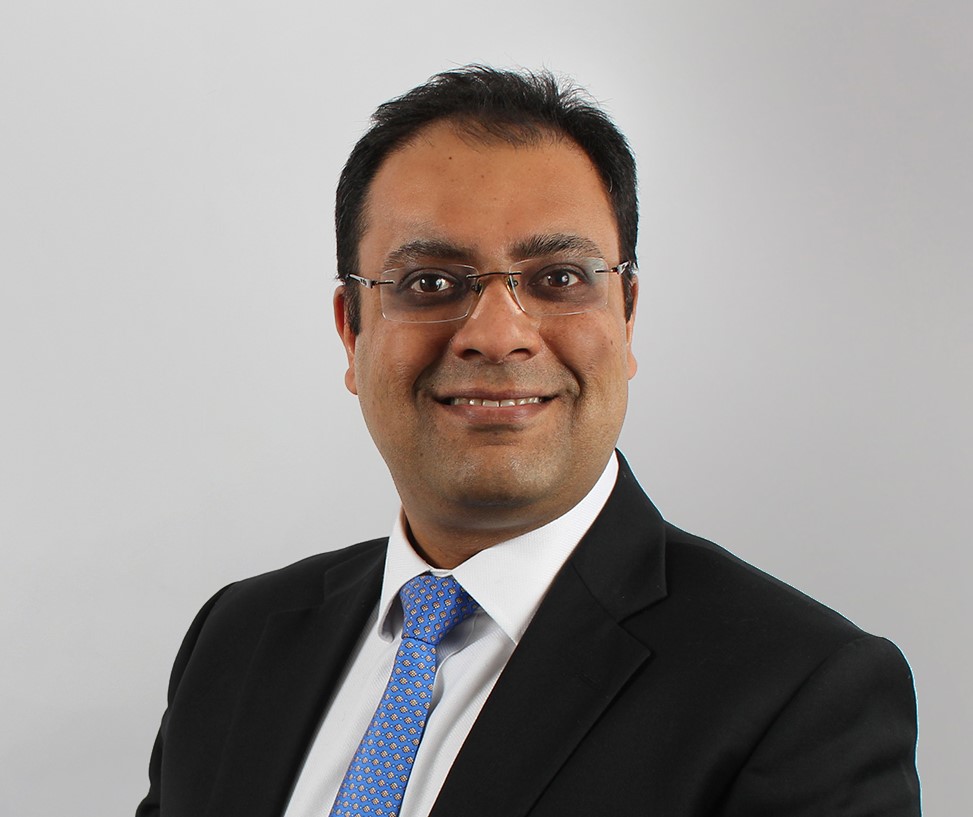
The new partner in Hill Dickinson’s London corporate team discusses the challenge of securing a training contract, an inspirational Lord Denning, & dreams of motor racing
What was your route into the profession?
Coming from a family of lawyers and legal professionals in India, my route to the profession was meant to be rather straightforward—after reading law, I would join my father and practise law with him. After graduating with an LLB (Hons) degree from University College London, I would ordinarily be eligible for enrolment as an Advocate in the Bar Council in India. Six months before my graduation, the rules in India changed such that I was required to pass a conversion examination in India to convert my English degree to Indian law—much like the QLTS in England. As a result of this change, someone filed what is called a ‘Public Interest Litigation’ in India, protesting against the change of the rules by the Bar Council. Accordingly, the Bar Council stopped holding conversion examinations until the outcome of the litigation was known; and because the rules had changed, I was not able to enrol as an Advocate. Concerned as to the uncertain delay this could cause to the commencement of my career, I returned to the UK to complete the Legal Practice Course and commenced my search for a training contract.
What has been your biggest career challenge so far?
My biggest career challenge by a long way was to find a training contract. Not only is there huge competition for places but, as an Indian national, I needed a work permit to commence a training contract in this country, which further complicated matters. After approximately 200 applications, I finally secured an interview for a training contract and, luckily, was offered that job.
Which person or persons within the legal profession inspires you most?
My first memories of being drawn to the legal profession was hearing a debate between my father and my grandfather about a Lord Denning judgment and its implications on contract law at the time in India. Lord Denning had, when delivering his judgment, applied the ‘presumed intention of the parties’ at the time the contract in question was entered into, to the facts of the case, above the provisions of the contract. I remember being inspired by Lord Denning and his willingness to override precedent to do what he saw as justice. After reading law and jurisprudence, I understood the difficulties that approach leaves for the law and its enforcement, but I could not help admiring the man for putting his sense of justice ahead of the letter of the law.
If you weren’t a lawyer, what would you choose as an alternate career?
It’s difficult to think of an alternative career without wishing for something you always dreamed of doing, whether or not you could have made a career of it. For instance, I would love to have made a career in motor racing, but realistically, my alternate career would probably be software engineering, as I was very good at it in my younger years.
Who is your favourite fictional lawyer?
I’d have to say Saul Goodman purely for his quote: “Some people are immune to good advice.”
What change would you make to the profession?
I have spent many years being involved with graduate recruitment. I found that the perception of the legal profession is that it is not very accessible to a large part of the population. Graduates were of the view that (a) law firms, in the most part, open their doors to graduates from the Russell Group, (b) the costs of completing the legal qualifications versus the likelihood of success of obtaining a training contract were disproportionate and (c) the work commitments and management style in law firms do not make it conducive for people with disabilities or personal commitments to build a successful legal career. I feel that the legal profession is missing out on significant talent if the younger generation continues to hold these views of the profession. Although law firms have recently made significant changes to improve the image of the profession, there remains a lot to be desired and significant further steps are required with the help of technology and artificial intelligence to make the profession more accessible and attractive to a greater part of the younger generation.
How do you relax?
I find long walks with my dog most useful to help me relax and unwind. It’s impossible not to be infected by his boundless energy and sheer joy just to be alive!