


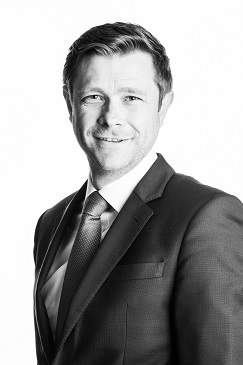
Stephen Hines, Consultant at Taylor Rose TTKW, is the first barrister President of the Forum of Insurance Lawyers
What was your route into the profession?
I was fortunate enough to fall into my first legal job after law school—a legal costs consultancy. The connections and experience I gained from there resulted in my getting a training contract, qualifying as a solicitor in 2009. I had higher rights of audience as a solicitor advocate from 2010, transferring to the Bar four years later in November 2014.
You are the first barrister President of the Forum of Insurance Lawyers (FOIL) and have previously worked as a solicitor—will this give you greater insight into the challenges facing FOIL members?
I would hope so, albeit perhaps to a limited extent. Ask me again in 12 months’ time!
What issues or challenges lie ahead in the next year for FOIL?
The challenges facing insurers and insurance lawyers as a result of the development and use of technology are immense. The work in the Brexit space will only intensify as we draw nearer to B-day (in March 2019). Work will continue in relation to the whiplash reforms, although the industry would appreciate the details of the legislative backdrop sooner rather than later. The decision in Vnuk, which has significant ramifications for the scope of compulsory RTA insurance and general insurance in the UK; the discount rate; online courts; fixed costs expansion; and GDPR (General Data Protection Regulation) are also rumbling on.
Is the issue of costs likely to dominate the agenda?
I don’t think it will dominate, but it certainly will feature.
What would you like to achieve in the next year?
I want to be able to look back and be able to say that I have had a positive impact. FOIL resolved to expand FOIL’s geographical areas of operation to the Republic of Ireland, the Channel Islands and the Isle of Man. Additional resources will now be available so that the work on making that happen can start.
In terms of your own legal career, what has been your biggest challenge so far?
The biggest challenge is daily and ongoing for most people—striking the right balance between work and life. Aside from that, I would say that the changes introduced in April 2013 had the biggest effect on me professionally, and I had to diversify my own portfolio to ensure that I wasn’t left behind.
Which person within the legal profession inspires you most?
Lord Justice Jackson has been a fairly significant and permanent feature of my career, especially since he commenced his review in 2008. His influence will no doubt ripple through practitioners’ lives for years to come.
If you weren’t a lawyer, what would you choose as an alternate career?
I would have loved to have been an astronaut, fighter pilot or theoretical physicist. I may still be in with a chance on the latter!
Who is your favourite fictional lawyer?
Fletcher Reede from Liar Liar, although in truth that’s probably more because I’m a big fan of Jim Carrey!
How do you relax?
I find that a nice meal and a visit to the cinema with my wife does the job perfectly.


.tmb-mov69x69.png?sfvrsn=9a8f1ea9_1)


