header-logo header-logo

27 February 2026
Issue: 8151 / Categories: Legal News , Public , Human rights , Judicial review , Compensation , Sanctions
printer mail-detail

NLJ this week: Art 6 boundaries tested from sanctions to Windrush

243397
A flurry of public law cases probes the reach of Article 6 of the European Convention on Human Rights. In NLJ this week, the public law team at Herbert Smith Freehills Kramer charts decisions from sanctions licensing to the Windrush Compensation Scheme

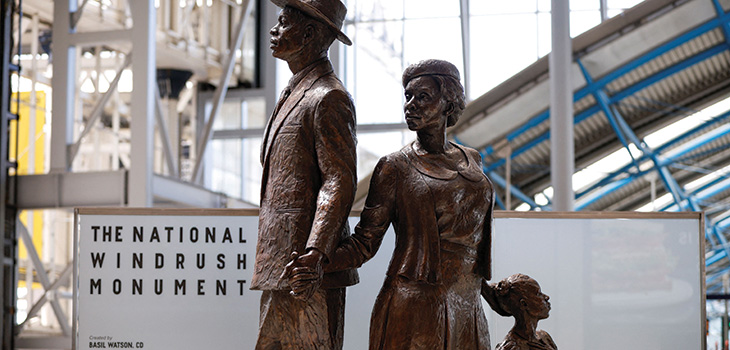
In PJSC VTB Bank, amended licences did not ‘usurp’ the Insolvency Court; SAMLA provided adequate review. But the Court of Appeal suggested Windrush claims are ‘capable of being civil rights for Art 6 purposes’.

Other rulings stress deference in national security and caution against courts becoming ‘the primary actor’ via mandatory orders. Together, the cases clarify limits while nudging the scope of fair trial rights.

MOVERS & SHAKERS

Clarke Willmott—Matthew Roach

Clarke Willmott—Matthew Roach

Partner joins commercial property team in Taunton office

Farrer & Co—Richard Lane

Farrer & Co—Richard Lane

Londstanding London firm appoints new senior partner

Bird & Bird—Sue McLean

Bird & Bird—Sue McLean

Commercial team in London welcomes technology specialist as partner

NEWS
What safeguards apply when trust corporations are appointed as deputy by the Court of Protection? 
Disputing parties are expected to take part in alternative dispute resolution (ADR), where this is suitable for their case. At what point, however, does refusing to participate cross the threshold of ‘unreasonable’ and attract adverse costs consequences?
When it comes to free legal advice, demand massively outweighs supply. 'Millions of people are excluded from access to justice as they don’t have anywhere to turn for free advice—or don’t know that they can ask for help,' Bhavini Bhatt, development director at the Access to Justice Foundation, writes in this week's NLJ
When an ex-couple is deciding who gets what in the divorce or civil partnership dissolution, when is it appropriate for a third party to intervene? David Burrows, NLJ columnist and solicitor advocate, considers this thorny issue in this week’s NLJ
NLJ's latest Charities Appeals Supplement has been published in this week’s issue
back-to-top-scroll