header-logo header-logo

NLJ this week: Deliveroo, vicarious liability & unsavoury bites

174059

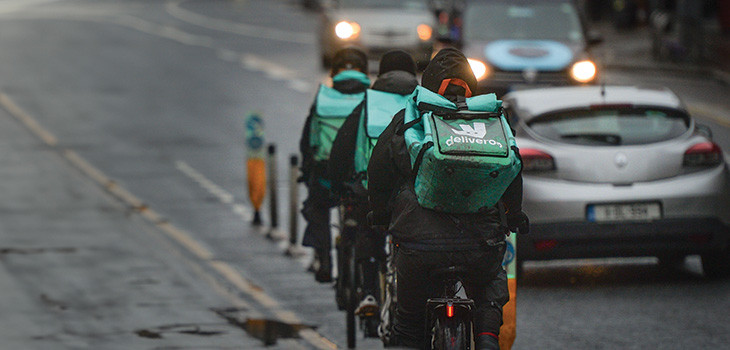
Vicarious liability and the gig economy may not be a match made in heaven, certainly not from the perspective of Deliveroo riders and other workers

In this week’s NLJ, Ross Fletcher, senior lecturer, Northumbria Law School, examines an unusual case that has served up a menu of unsavoury snacks for those involved.

The story of R v Rocha starts with a pizza delivery and proceeds to Winchester Crown Court, via a substitute Deliveroo-er, a seemingly uncooperative customer and a bitten thumb. Fletcher attempts to untangle the threads of liability, with reference to existing case law on vicarious liability.

Fletcher writes: ‘The law reports contain many examples of attempts by commercial enterprises to evade liability for the acts of their workers. However, the law in this area has been quick to adapt accordingly, and it is likely that the same will be true of this case in any civil proceedings that may arise.’

MOVERS & SHAKERS

Katten Muchin Rosenman—Charlotte Hill

Katten Muchin Rosenman—Charlotte Hill

Katten strengthens financial markets and funds group in London

Hugh James—Keith Cundall & Lee Hart

Hugh James—Keith Cundall & Lee Hart

Hugh James expands national Serious Injury team with two new Partners

HFW—Rémi Ducloyer

HFW—Rémi Ducloyer

HFW continues Paris office growth with public law Partner hire

NEWS
The Court of Appeal's decision in Mazur v Charles Russell Speechlys LLP has lifted months of uncertainty for Chartered Legal Executives while prompting a rethink of regulation and supervision
The assisted dying debate returns to Westminster as Lauren Edwards MP reintroduces legislation that stalled in the House of Lords last session despite clearing the Commons
A little-noticed provision of the Crime and Policing Act 2026 has fundamentally expanded corporate criminal liability
Artificial intelligence is transforming legal practice, but careless reliance on it is creating growing professional risks
The law offers cohabiting couples surprisingly greater protection after one partner dies than when they separate during life
back-to-top-scroll