header-logo header-logo

19 February 2021
Issue: 7921 / Categories: Legal News , Housing , Covid-19 , Landlord&tenant
printer mail-detail

NLJ this week: Evictions on hold

39775
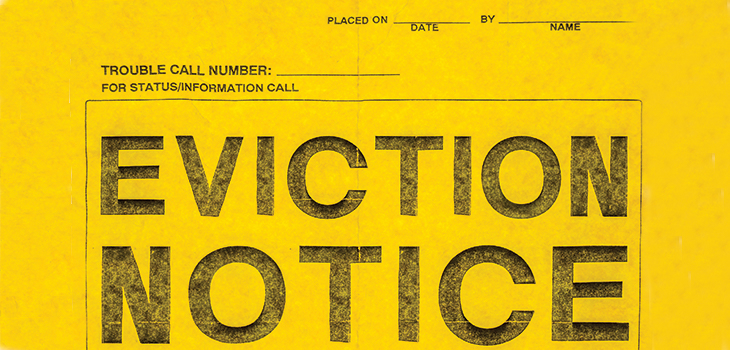
Writing in NLJ this week, David Renton examines the current status of the eviction ban, and revisits the government’s promised—but as yet undelivered—reforms to the landlord and tenant sector.

Despite ministers’ assurances that the government remains committed to tenancy reform, so far it ‘has refused to publish draft legislation or to provide a parliamentary timetable so that its commitments could have meaning’, Renton notes.

He emphasises the thousands of people left in situations of insecurity—with social housing debt estimated to have risen to more than £1bn over the course of pandemic—adding that ‘day by day and week by week, the pressure is growing on the government to act on its promises.’

MOVERS & SHAKERS

Harneys—Maggie Kwok & George Weston

Harneys—Maggie Kwok & George Weston

Harneys senior leadership appointments

Freeths—Keith Browne & Jim Jordan

Freeths—Keith Browne & Jim Jordan

Freeths strengthens London Construction and Engineering practice with two strategic senior hires

Anthony Collins—Laura Moss

Anthony Collins—Laura Moss

Anthony Collins announces strategic hire to deepen skills base in the social business sector

NEWS
More than 100 teams from the legal and financial services sectors competed in five sports at the 51st Law Society RFC Festival of Sport earlier this month
Part-time status need only be an effective cause of less favourable treatment, rather than the sole cause, the Supreme Court has held in Augustine v Data Cars
Britain’s new acknowledgement that Israel’s occupation is unlawful, and accompanying settlement-goods ban and sanctions, is significant but overdue, argue Danny Friedman KC and Victor Kattan in NLJ this week
New planning fee rises, wider trade union access rights and a service-by-email trap feature in Stephen Gold’s latest Civil Way
Existing defamation law can respond to AI ‘hallucinations’, but allocating responsibility will prove harder where outputs reach users without human intervention
back-to-top-scroll