header-logo header-logo

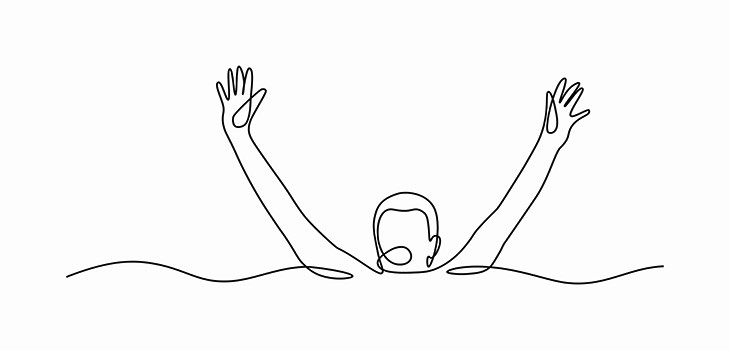
Not waving but drowning: a misunderstanding in court

16 February 2024 / Stephen Gerlis
Issue: 8059 / Categories: Features , Criminal
printer mail-detail
158885
A misunderstanding as to a defendant’s gesture in court had an unfortunate consequence, writes Stephen Gerlis

In R v HLN [2023] EWCA Crim 1356, the defendant to criminal charges of rape found himself in an awkward position when his reaction at a sentencing hearing was misinterpreted by the judge. The fact that this could have been avoided is an object lesson for those who practice in the field of criminal law.

The defendant had pleaded guilty to two charges of rape against his former partner. However, there seemed to be some confusion as to the basis of the plea, which had not been reduced into writing.

It is important to understand the background to the case. The relationship between the parties commenced in 2016. It was alleged that shortly afterwards, the defendant had raped the victim while she was asleep, a fact only realised when the victim awoke later and discovered a discharge in her underwear. The relationship between the parties nevertheless continued and they had a daughter

If you are not a subscriber, subscribe now to read this content
If you are already a subscriber sign in
...or Register for two weeks' free access to subscriber content

MOVERS & SHAKERS

HFW—Guy Marrison

HFW—Guy Marrison

Global aviation disputes practice boosted by London partner hire

Morrison Foerster—Jenny Galloway & Luke Rowland

Morrison Foerster—Jenny Galloway & Luke Rowland

Firm grows London practice with two partner promotions

Hogan Lovells—David Hansom

Hogan Lovells—David Hansom

Government contracts and procurement practice expands with London partner hire

NEWS
Writing in NLJ this week, NLJ columnist Dominic Regan surveys a landscape marked by leapfrog appeals, costs skirmishes and notable retirements. With an appeal in Mazur due to be heard next month, Regan notes that uncertainties remain over who will intervene, and hopes for the involvement of the Lady Chief Justice and the Master of the Rolls in deciding the all-important outcome
After the Southport murders and the misinformation that followed, contempt of court law has come under intense scrutiny. In this week's NLJ, Lawrence McNamara and Lauren Schaefer of the Law Commission unpack proposals aimed at restoring clarity without sacrificing fair trial rights
The latest Home Office figures confirm that stop and search remains both controversial and diminished. Writing in NLJ this week, Neil Parpworth of De Montfort University analyses data showing historically low use of s 1 PACE powers, with drugs searches dominating what remains
Boris Johnson’s 2019 attempt to shut down Parliament remains a constitutional cautionary tale. The move, framed as a routine exercise of the royal prerogative, was in truth an extraordinary effort to sideline Parliament at the height of the Brexit crisis. Writing in NLJ this week, Professor Graham Zellick KC dissects how prorogation was wrongly assumed to be beyond judicial scrutiny, only for the Supreme Court to intervene unanimously
A construction defect claim in the Court of Appeal offers a sharp lesson in pleading discipline. In his latest 'Civil way' column for NLJ, Stephen Gold explains how a catastrophically drafted schedule of loss derailed otherwise viable claims. Across the areas explored in this week's column, the message is consistent: clarity, economy and proper pleading matter more than ever
back-to-top-scroll