


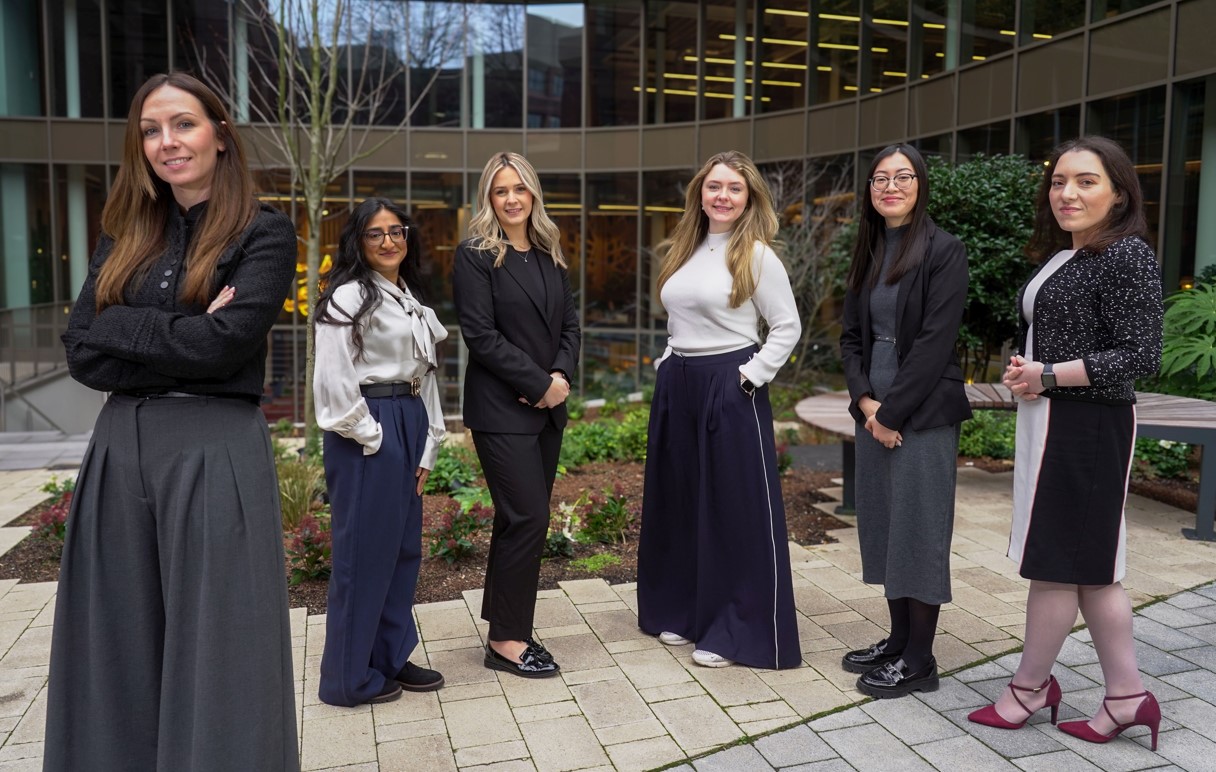
Law firm Switalskis is celebrating the qualification of five solicitors who began their careers with the firm.
The newly qualified solicitors each progressed through Switalskis’ Qualifying Solicitors Programme and now join three of its well-regarded departments. Their success reflects Switalskis’ commitment to developing legal talent across its leading practice areas in Yorkshire and beyond.
Rebecca Wardle and Georgia McKelvey strengthen the Court of Protection Health and Welfare team, recognised for its expertise in providing legal support for individuals who lack the mental capacity to make decisions. Ellie Goodison and Emily Chan join the Clinical Negligence department, an area which has received recognition for securing justice for those affected by medical errors. Maariyah Sidat becomes part of the Family law team to advise and support clients with a range of issues, including divorce, separation and financial affairs.
Switalskis’ Qualifying Solicitors Programme offers two tailored training routes to qualification for aspiring solicitors. These include traditional two-year training contracts and 32-month graduate solicitor apprenticeships, each combining hands-on experience with structured learning. The firm is committed to reducing barriers into the profession and encourages applications from diverse backgrounds.
Switalskis recently hosted its first Insight Day at its Leeds headquarters, providing an overview of its training programmes. It also gave attendees the chance to meet current trainees and speak directly with legal professionals. Applications for Switalskis’ solicitor training opportunities open on 3 March and close on 31 March 2025.
Amy Clowrey, director and training principal at Switalskis, says: 'Watching our newly qualified solicitors grow in skill and confidence has been a privilege. They’ve worked incredibly hard to reach this point, and I know they’ll make a real impact, both for clients and our firm. Seeing them progress is exactly why we invest in this programme - to nurture talent, create opportunities, and to ensure long-term service quality for our clients.'
Image caption (L-R): Amy Clowrey, Maariyah Sidat, Georgia McKelvey, Ellie Goodison, Emily Chan and Rebecca Wardle


