header-logo header-logo

29 March 2018
Issue: 7787 / Categories: Legal News , Procedure & practice , Technology
printer mail-detail

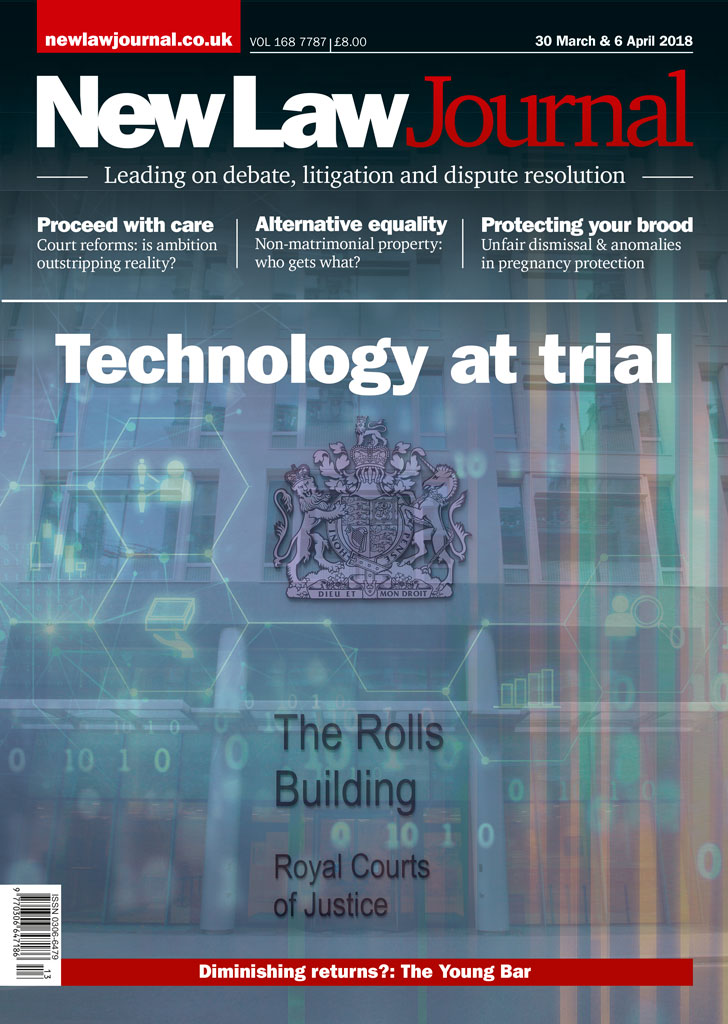
Technology at trial: paperless trials?

nlj_7787_cover

Technological change in the courtroom has proceeded at a slow pace, Michael Fletcher of Pinsent Masons and Helen Pugh of 3 Hare Court write in NLJ this week.

The concept of ‘paperless trials’ may have been around for many years, but they are still rare (at best) at county court level, and it is only in this decade that High Court trials have used electronic bundles. At the state-of-the-art Rolls Building, meanwhile, lever-arch files appear on the courtroom shelves despite the technology available. Fletcher and Pugh argue that the technology available is being underused and there remains untapped potential.

Issue: 7787 / Categories: Legal News , Procedure & practice , Technology
printer mail-details
RELATED ARTICLES

MOVERS & SHAKERS

Clyde & Co—Suriya Ashok

Clyde & Co—Suriya Ashok

Clyde Co strengthens energy transition and construction offering with hire of Suriya Ashok

Jurit—Nicole Gallop Mildon

Jurit—Nicole Gallop Mildon

Jurit appoints rare dual-qualified lawyer to expand Anglo-French private wealth expertise

NEWS
The Financial Reporting Council’s revised Audit Enforcement Procedure will alter the balance of power in corporate investigations
A telecoms operator may be able to hold over under the Landlord and Tenant Act 1954, yet still be unable to secure a renewal: an outcome described as a legal ‘paradox’

Safety fears do not automatically justify shutting an interested person out of a statutory will application

Consumer credit law is heading for its biggest shake-up in 50 years, with the Consumer Credit Act 1974 set to yield much of its detailed statutory machinery to FCA rules
The Supreme Court has settled a long-running dispute over part-time workers: unfavourable treatment need be a significant or effective cause, not the sole cause
back-to-top-scroll