header-logo header-logo

23 June 2023 / Stephen Shaw
Issue: 8030 / Categories: Features , Profession
printer mail-detail

The onus of honour

127481
What exactly is ‘honour’, & once lost, how easily might it be restored? Stephen Shaw discusses the challenges of resolution for a wronged party

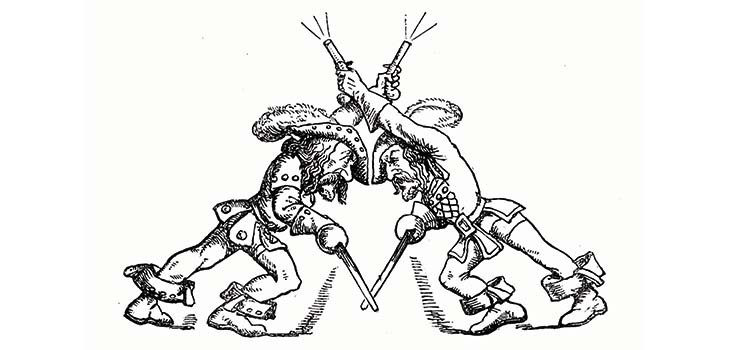
British society is shot through with the idea of honour. We talk of ‘doing the honourable thing’. Members of Parliament are referred to as ‘Honourable’, Cabinet Ministers as ‘Right Honourable’. Knights of old would indulge in a duel to the death to uphold their honour. Better to die honourably than live dishonoured.

The law especially places a heavy emphasis on honour. The four Inns of Court are all ‘Honourable Societies’. Circuit judges are addressed as ‘Your Honour’. To be ‘an honourable person’ is the aspiration of all who wish to be respected and upstanding in society.

But what exactly is ‘honour’? If you research the dictionary definitions, synonyms like ‘respect’, ‘admiration’, ‘respectable’, ‘proper’ and ‘right’ tend to crop up. At the Bar, for me, behaving honourably meant, essentially, being honest. You cannot honourably withhold a document that should have been disclosed; you cannot tell your opponent that you

If you are not a subscriber, subscribe now to read this content
If you are already a subscriber sign in
...or Register for two weeks' free access to subscriber content

MOVERS & SHAKERS

Thackray Williams—Lucy Zhu

Thackray Williams—Lucy Zhu

Dual-qualified partner joins as head of commercial property department

Morgan Lewis—David A. McManus

Morgan Lewis—David A. McManus

Firm announces appointment of next chair

Burges Salmon—Rebecca Wilsker

Burges Salmon—Rebecca Wilsker

Director joins corporate team from the US

NEWS
What safeguards apply when trust corporations are appointed as deputy by the Court of Protection? 
Disputing parties are expected to take part in alternative dispute resolution (ADR), where this is suitable for their case. At what point, however, does refusing to participate cross the threshold of ‘unreasonable’ and attract adverse costs consequences?
When it comes to free legal advice, demand massively outweighs supply. 'Millions of people are excluded from access to justice as they don’t have anywhere to turn for free advice—or don’t know that they can ask for help,' Bhavini Bhatt, development director at the Access to Justice Foundation, writes in this week's NLJ
When an ex-couple is deciding who gets what in the divorce or civil partnership dissolution, when is it appropriate for a third party to intervene? David Burrows, NLJ columnist and solicitor advocate, considers this thorny issue in this week’s NLJ
NLJ's latest Charities Appeals Supplement has been published in this week’s issue
back-to-top-scroll