header-logo header-logo

26 April 2018
Categories: Movers & Shakers , Profession
printer mail-detail

3 Hare Court

jeffrey_golden

Co-heads of chambers announced

3 Hare Court has announced Jeffrey Golden and Simon Davenport QC as its co-heads of chambers.

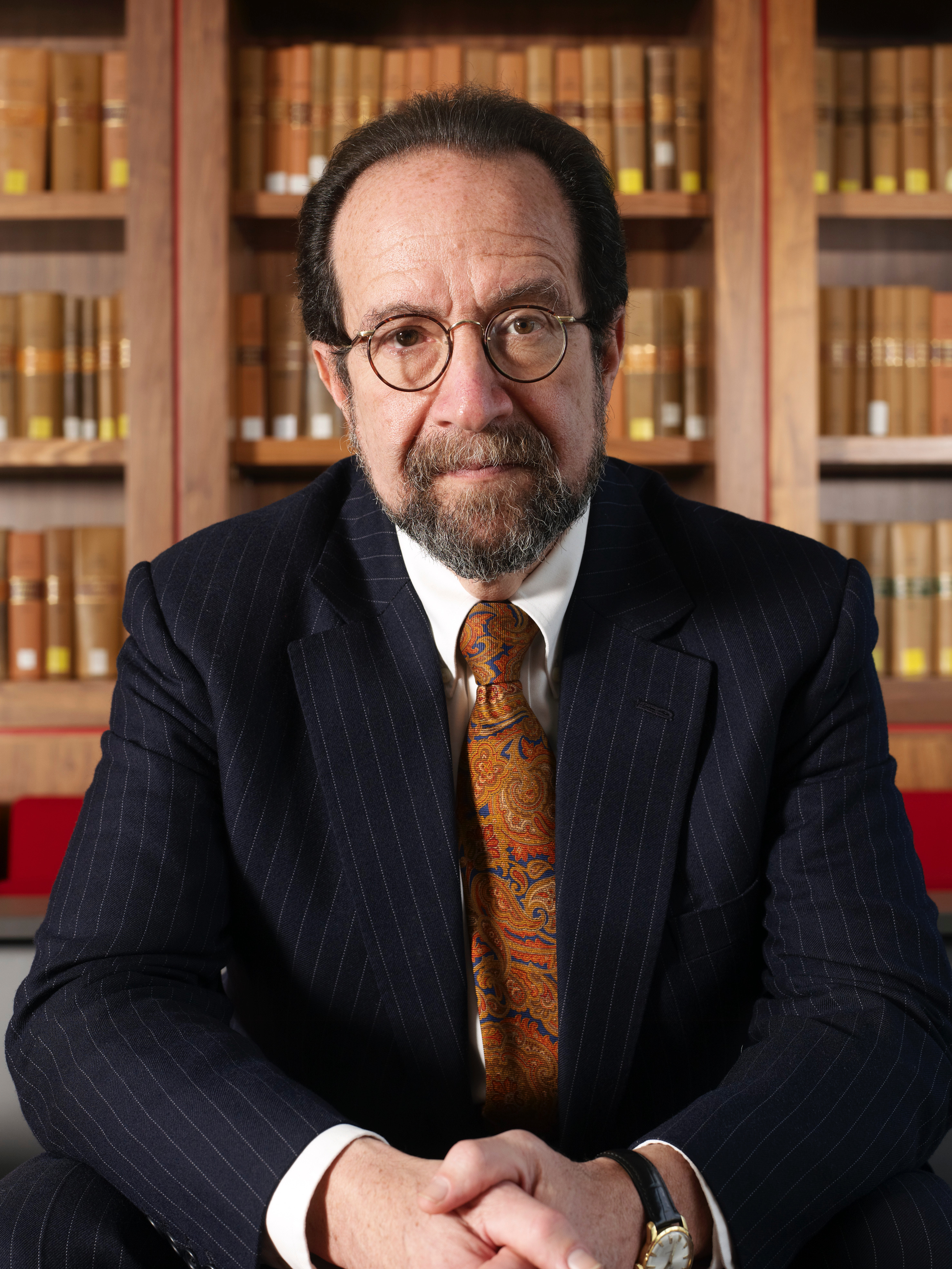
Jeffrey Golden’s appointment marks a first for the Bar in the selection of a non-barrister as Head of Chambers. Jeffrey (pictured) is an Honorary Master of the Bench of the Honourable Society of Middle Temple, and an experienced arbitrator who specialises in capital markets matters. Admitted to practise in the states of New York and New Jersey, he is also the first US-qualified lawyer to be appointed partner in a Magic Circle firm, after joining the partnership of Allen & Overy in 1994 and founding its US law practice. Jeffrey became a member of 3 Hare Court in 2014, and also serves as chairman of The P.R.I.M.E. Finance Foundation in The Hague.

Jeffrey said: ‘In a long career not short in excitement I can’t think of any other opportunity to make a positive difference that matches this one. 3 Hare Court is a fantastic set comprised of standout individuals. Through each practice area runs the common thread of international work, which is a perfect fit for my experience and as to which I hope I will be able to offer guidance. I am also delighted that we will be able to draw on the future guidance of our retiring Head of Chambers, Peter Knox QC, who will continue in his practice from 3 Hare Court.’

Simon Davenport QC will also work alongside Jeffrey as head of chambers. Simon, who was recently appointed Master of the House at Inner Temple, has led 3 Hare Court's civil fraud, commercial dispute resolution and insolvency groups for the past eight years. 

Simon commented: 'I’m delighted to have been elected joint Head of Chambers, especially at this exciting moment when we are presented with opportunities to pursue our international business and, drawing on Jeff’s law firm experience, can develop and strengthen existing ties with leading solicitors at home and lawyers abroad while taking advantage of chances to modernise, such as of the use of Alternative Business Structures.'

MOVERS & SHAKERS

Forbes Solicitors—Stephen Barnfield

Forbes Solicitors—Stephen Barnfield

Regulatory team boosted by partner hire amid rising health and safety demand

Arc Pensions Law—Kris Weber

Arc Pensions Law—Kris Weber

Legal director promoted to partner at specialist pensions firm

Clarke Willmott—Jonathan Cree

Clarke Willmott—Jonathan Cree

Residential development capability expands with partner hire in Birmingham

NEWS

From blockbuster judgments to procedural shake-ups, the courts are busy reshaping litigation practice. Writing in NLJ this week, Professor Dominic Regan of City Law School hails the Court of Appeal's 'exquisite judgment’ in Mazur restoring the role of supervised non-qualified staff, and highlights a ‘mammoth’ damages ruling likened to War and Peace, alongside guidance on medical reporting fees, where a pragmatic 25% uplift was imposed

Momentum is building behind proposals to restrict children’s access to social media—but the legal and practical challenges are formidable. In NLJ this week, Nick Smallwood of Mills & Reeve examines global moves, including Australia’s under-16 ban and the UK's consultation
Reforms designed to rebalance landlord-tenant relations may instead penalise leaseholders themselves. In this week's NLJ, Mike Somekh of The Freehold Collective warns that the Leasehold and Freehold Reform Act 2024 risks creating an ‘underclass’ of resident-controlled freehold companies
Timing is everything—and the Court of Appeal has delivered clarity on when proceedings are ‘brought’. In his latest 'Civil way' column for NLJ, Stephen Gold explains that a claim is issued for limitation purposes when the claim form is delivered to the court, even if fees are underpaid
The traditional ‘single, intensive day’ of financial dispute resolution (FDR) may be due for a rethink. Writing in NLJ this week, Rachel Frost-Smith and Lauren Guiler of Birketts propose a ‘split FDR’ model, separating judicial evaluation from negotiation
back-to-top-scroll