header-logo header-logo

29 March 2024 / Lucy Blake
Issue: 8065 / Categories: Opinion , Fraud
printer mail-detail

Bold beginnings at the SFO

166027
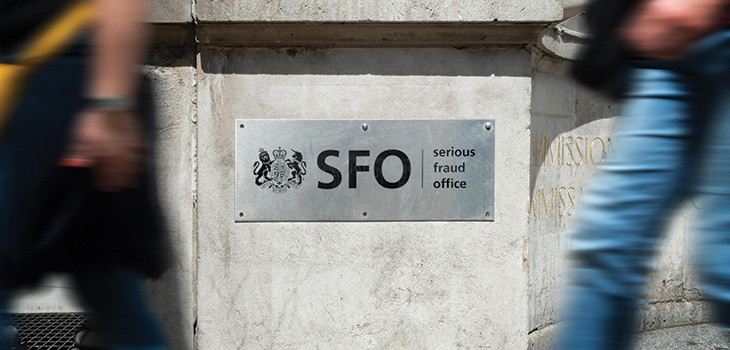
Does Nick Ephgrave’s appointment herald a new era for the Serious Fraud Office? Lucy Blake predicts the beleaguered SFO may be about to change tack

The Serious Fraud Office (SFO) has endured considerable flack in recent years following several high-profile collapsed prosecutions and closed investigations. The decision not to renew Lisa Osofsky’s tenure but instead appoint Nick Ephgrave, a former police officer, as the organisation’s new director (the first non-lawyer to hold the SFO’s directorship in its 35-year history) was interpreted by many as an indication of a change in direction for the agency.

An early clue as to Ephgrave’s strategy and priorities for the coming five years came in February, when he gave his first public speech since replacing Osofsky in August 2023. After several months in the job, Ephgrave has had plenty of time to look under the bonnet and take stock of the SFO’s problems and how they might be fixed. His speech, and indeed many of his actions since joining, suggests he won’t be sitting on his hands.

Past

To access this full article please fill the form below.
All fields are mandatory unless marked as 'Optional'.
If you already a subscriber to New Law Journal, please login here

MOVERS & SHAKERS

Signature Litigation—Catherine Naylor

Signature Litigation—Catherine Naylor

International fraud and asset recovery offering boosted by partner hire

Stevens & Bolton—Alexa Payet

Stevens & Bolton—Alexa Payet

Private wealth disputes team adds contentious probate specialist

Morgan Lewis—Paul Feldberg

Morgan Lewis—Paul Feldberg

Firm strengthens investigations and sanctions capabilities with London partner hire

NEWS
Uber has built a formidable strategy for insulating itself from liability for drivers’ conduct, but the legal terrain differs sharply between the US and England and Wales
The House of Lords (Hereditary Peers) Act 2026 marks a constitutional watershed by severing the centuries-old link between hereditary titles and automatic membership of the upper chamber
The Civil Justice Council’s review of Part III of the Solicitors Act 1974 could mark the end of what one commentator calls an ‘outdated’ and overly technical regime governing solicitor-client fee disputes
Artificial intelligence, proportionality and public decision-making are under increasing judicial scrutiny, according to the latest public law round-up from Herbert Smith Freehills Kramer
Families relying on informal agreements over property ownership could face costly consequences if disputes arise, the High Court has warned
back-to-top-scroll